Disability in Afghanistan: School, Work, and Who Steps In
Disability in Afghanistan: School, Work, and Who Steps In
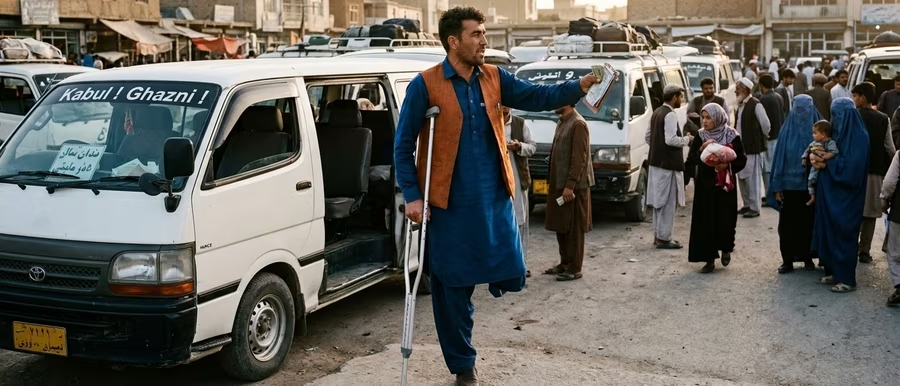
Afghanistan has one of the highest rates of disability per capita in the world — a legacy of four decades of war. What happens next, at school or at work, usually has less to do with government policy than with who happens to step in.

[Read More]

Naan: The Bread Behind Every Afghan Meal

Naan: The Bread Behind Every Afghan Meal

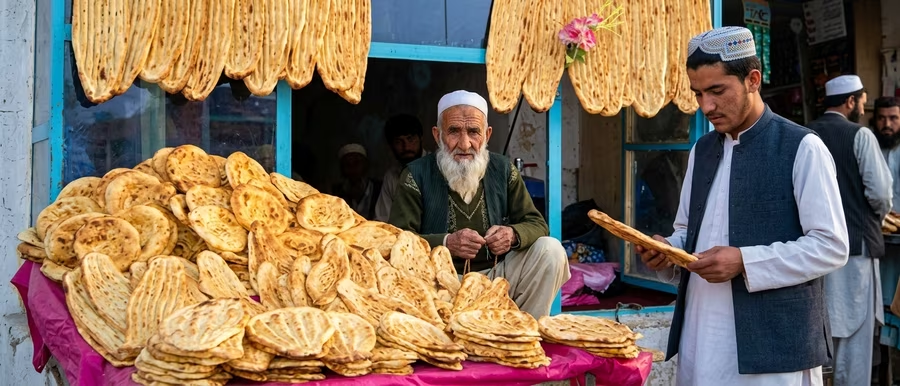
No Afghan meal is really complete without naan (نان). It shows up at breakfast, lunch, and dinner — and depending on what goes into the dough and how it’s baked, it can end up looking and tasting like a completely different food.

[Read More]
Categories: culture  Tags: afghanistan food bread naan tandoor culture 

Rats, Swapped Medicine, Shared Beds: What Patients Say Happens in Afghanistan's Hospitals

Rats, Swapped Medicine, Shared Beds: What Patients Say Happens in Afghanistan's Hospitals

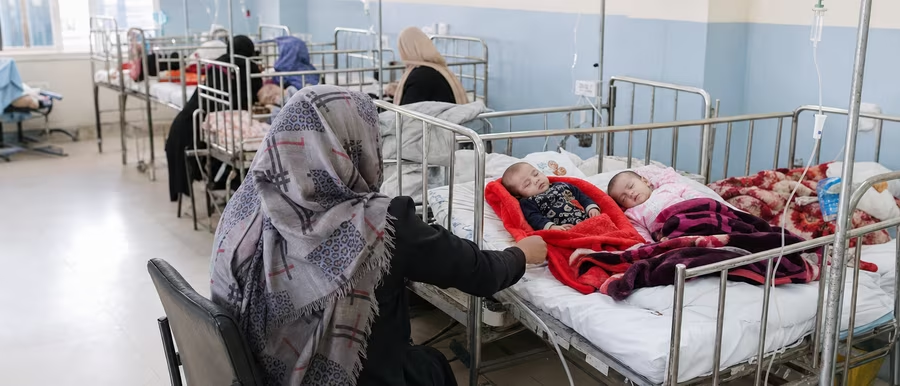
Rats under the beds in a maternity ward. Prescriptions written so only one pharmacy can read them. Two sick children sharing a single bed. This is what patients and their families describe happening inside Afghanistan’s hospitals.

[Read More]

How Afghanistan's Hospital System Works: Government, Private, Semi-Government, and NGO Care

How Afghanistan's Hospital System Works: Government, Private, Semi-Government, and NGO Care

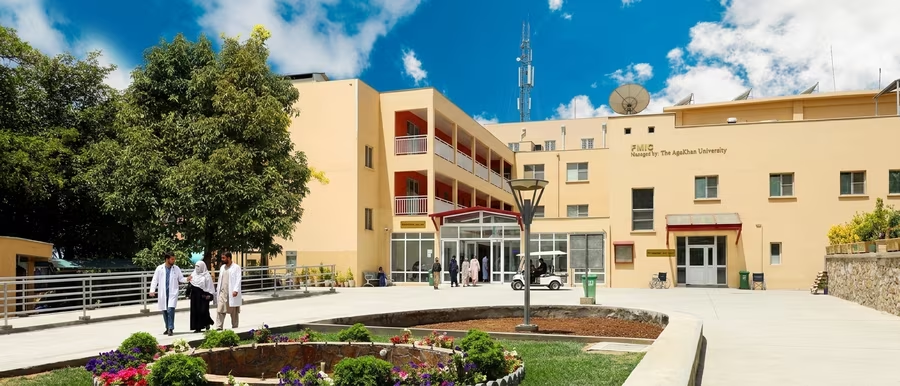
Whether you get real medical care in Afghanistan often comes down to one thing before your symptoms even matter: what you can pay. That single fact splits the system into four different kinds of hospitals, each with its own rules for who foots the bill.

[Read More]

Boji-Dozi: Afghanistan's Sack Embroidery Craft

Boji-Dozi: Afghanistan's Sack Embroidery Craft

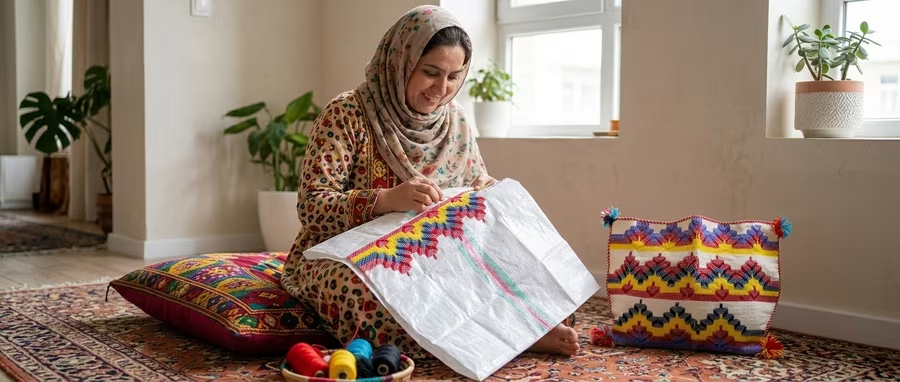
One of Afghanistan’s simplest handicrafts starts with something most people would throw away: an empty sack. Boji-dozi — literally “sack-embroidery” — turns that plastic-woven material into something worth using, from shopping bags to table spreads, with nothing more than colored thread, a needle, and a hand-stitched design.

[Read More]

Kah-gil: The Straw-and-Clay Plaster That Keeps Afghan Roofs Dry

Kah-gil: The Straw-and-Clay Plaster That Keeps Afghan Roofs Dry

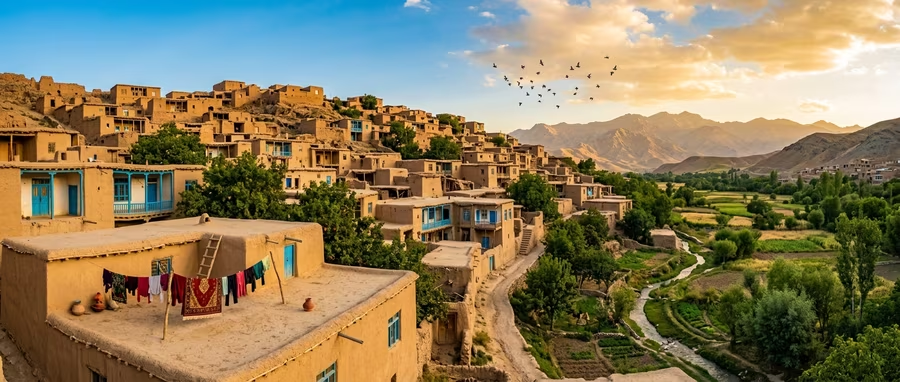
Long before cement became common in Afghanistan, families sealed their roofs against snow and rain with nothing more than clay, chopped straw, and water — a mixture still applied by hand today, in cities and villages alike.

[Read More]

Khurjin: Afghanistan's Handwoven Wool Saddlebag

Khurjin: Afghanistan's Handwoven Wool Saddlebag

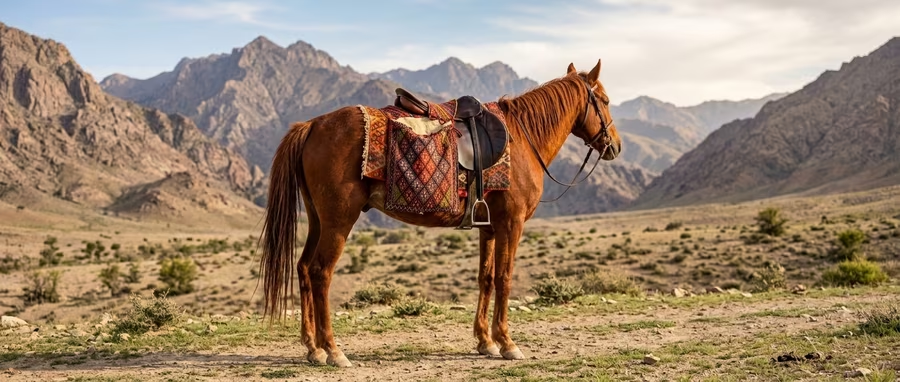
The khurjin is one of the most practical objects rural Afghanistan has produced — a double-pocketed wool saddlebag, woven flat on the ground and then folded and stitched into shape. It travels to the field, the market, the mill, and back, draped across the back of a horse or donkey — and increasingly, hanging from a bicycle or motorcycle too.

[Read More]

Toshak and Poshti: The Floor Bedding at the Heart of Afghan Home Life

Toshak and Poshti: The Floor Bedding at the Heart of Afghan Home Life

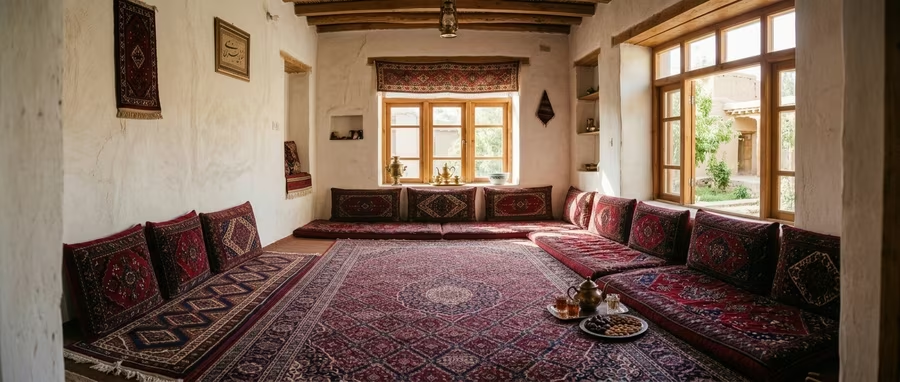
Walk into a traditional Afghan home and the first thing you notice is the floor. No sofas against the wall, no armchairs in the corner — instead, soft cushioned mattresses laid flat and bolstered with back supports, all arranged in a neat line where the wall meets the carpet. That is the toshak and poshti, and once you understand them, a lot about Afghan home life starts to make sense.

[Read More]