Walk into a traditional Afghan home and the first thing you notice is the floor. No sofas against the wall, no armchairs in the corner — instead, soft cushioned mattresses laid flat and bolstered with back supports, all arranged in a neat line where the wall meets the carpet. That is the toshak and poshti, and once you understand them, a lot about Afghan home life starts to make sense.
What are a toshak and poshti?
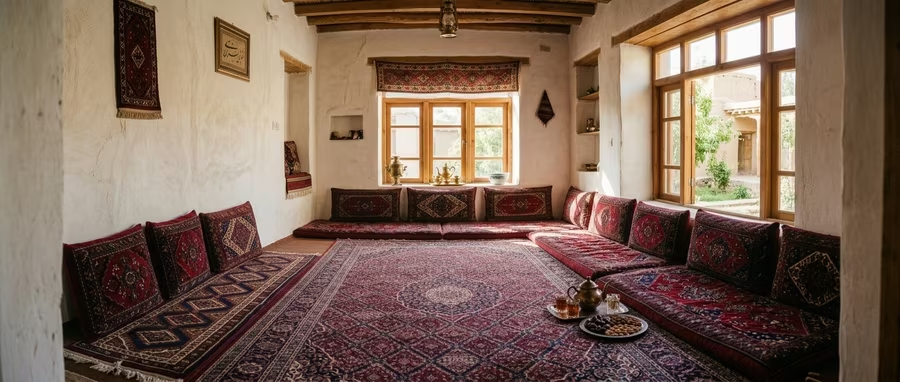
A toshak (توشک) is a flat, padded floor mattress — firm enough to sit on, soft enough to sleep on. Most are filled with cotton, foam, or synthetic fibers; some traditional ones use natural materials. They are covered in sturdy fabric, often with bold geometric or floral patterns in deep reds, blues, and greens.
The poshti (پشتی) is the backrest that pairs with it. It sits upright against the wall and lets you lean back comfortably during the hours-long gatherings that Afghan hospitality demands. Together, the two pieces transform a bare room into a fully functional living space.
In many traditional Afghan homes, toshaks are arranged along all four walls of a room, running edge to edge and forming a continuous ring of seating.
The mehman khaana
Most Afghan homes reserve a dedicated room called the mehman khaana (مهمان خانه) — literally “guest house” — for receiving visitors. It is typically the best-kept room in the home: a fine carpet on the floor, toshaks and poshti cushions arranged in a U-shape along the walls, and enough space to seat a dozen people comfortably.
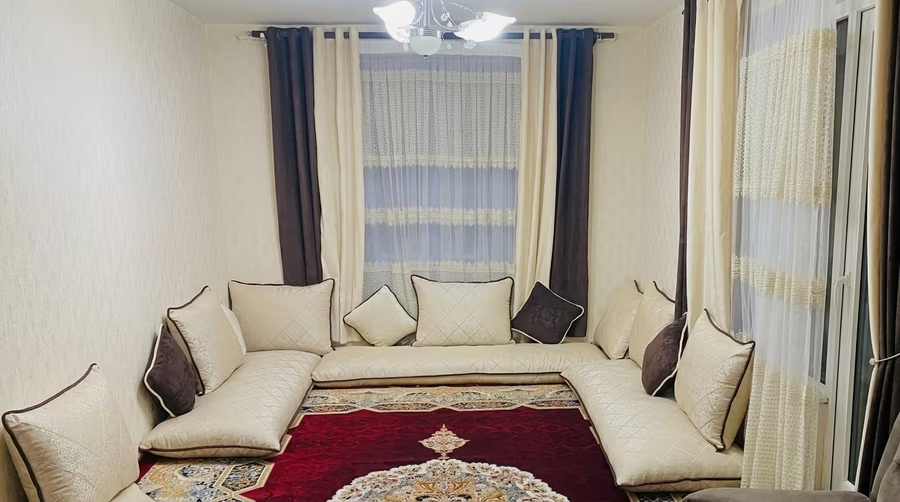
Guests sit on the toshaks and lean back on the poshti. The floor-level seating brings everyone down to the same height, which gives the room a relaxed, equal quality that a chair-and-table layout rarely achieves. Afghan hospitality is not just about what you serve — it is about the space you create for people to feel at ease.
Why toshak and poshti, not wooden furniture?
The reasons are practical and cultural, and they have reinforced each other over time.
Space. A room lined with toshaks does double duty. Fold them away in the morning and you have an empty room for the day; lay them back out at night and it becomes a bedroom. In a large household, this flexibility matters.
Cost. A full set of toshak and poshti costs far less than a bed frame and sofa. They are easier to repair, re-stuff, and replace, and skilled seamstresses who make them are found in almost every neighborhood.
Hospitality. A sofa seats three or four people. Toshaks lining a room can seat twenty. When guests arrive — and in Afghanistan they arrive often — this matters immediately.
Mobility. Unlike heavy furniture, toshaks can be moved to any room. They follow the household’s needs rather than sitting fixed in one place.
Beyond the practical, there is simple continuity. Families have sat this way for generations. The toshak and poshti carry an association with warmth, family, and home that a modern sofa does not yet have in Afghan culture.
Types
- Cotton — the most common; soft, widely available, and used for both sleeping and sitting toshaks.
- Wool — heavier and warmer, better suited to cold regions.
- Foam — lighter and increasingly popular in urban areas.
- Hand-sewn traditional — made by local craftswomen, covered in ornate fabric; still valued for guest rooms and special occasions.
- Millet-seed (توشک ارزن) — filled with small dried millet grains that distribute pressure evenly. Said to be particularly comfortable for people who spend long hours lying down, including patients recovering from illness.
Poshti are filled with cotton, wool, or foam depending on the toshak they pair with.
Sleeping toshak and sitting toshak
Some households use the same toshak for both purposes — it serves as seating during the day and a bed at night. But in a lot of homes the two are kept separate, and they are made quite differently.
The sleeping toshak tends to be wider, with a soft covering — cotton is the most common. The cover is plain and smooth, chosen for comfort against skin rather than appearance. During the day it gets rolled or folded away; at night it is spread back out. Its companion is the balesht, a pillow, not a poshti.
The sitting toshak is furniture first. Its cover is something more substantial — velvet, brocade, or sometimes actual carpet fabric — chosen to look good in a room and hold up to years of daily use. The poshti is made from the same material and forms a matching set.
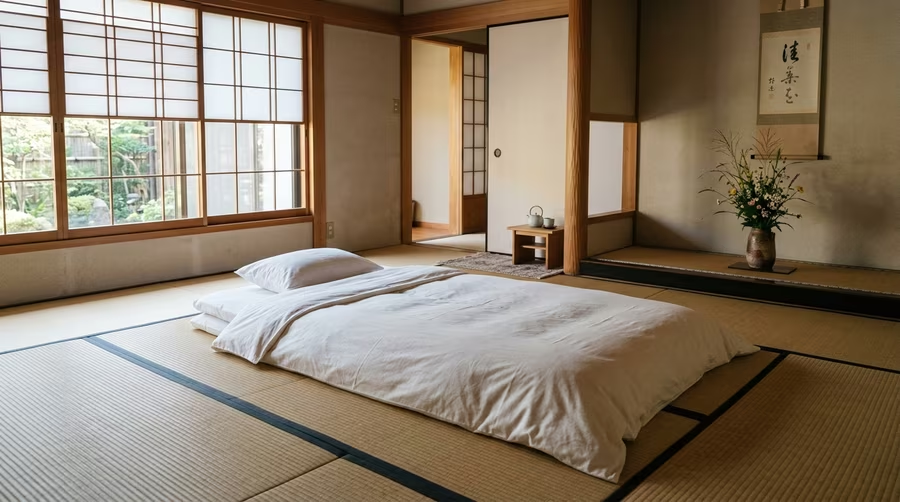
In this sense the sleeping toshak is the Afghan equivalent of the Japanese futon — a floor-level mattress that gets put away during the day, keeping the room free for other uses. Both are flexible, both fold up, both reflect the idea that a room should do more than one thing.
Today
In Afghan cities, many homes now have sofas and beds alongside toshaks, or instead of them. But in most households — urban or rural — the toshak has not disappeared. The mehman khaana still gets set up with floor cushions when guests are expected. Families still sit on the floor for meals and gatherings, even in furnished apartments.
The toshak is not a relic of the past waiting to be replaced. It is a living part of Afghan home life, adapted to modern materials and settings while keeping its essential character: a piece of bedding that makes space for everyone.
Do you have a comment or something to share? contact us: info@aboutafg.com