The samawat is a wood-fired metal urn used to heat and hold water for tea. It is found in homes, chai khanas (tea houses), and workplaces across Afghanistan. Most Afghans have grown up around one.
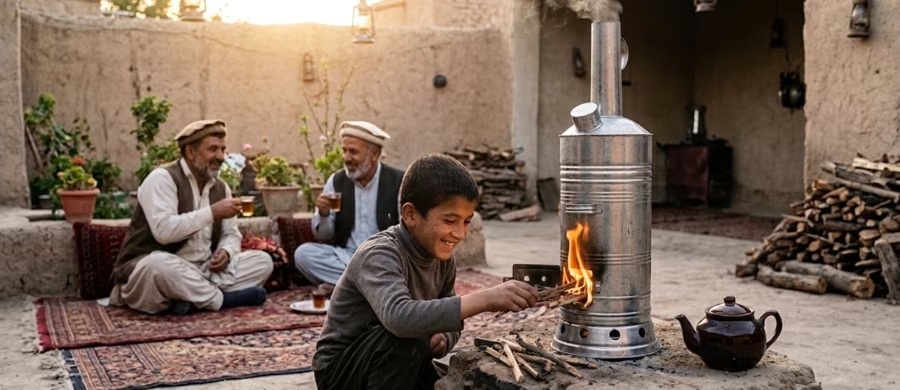
How it is used
Someone lights the samawat early in the morning, before the household is fully awake, so hot water is ready for breakfast tea. In a chai khana it may stay lit all day.
Tea is usually brewed as a strong concentrate in a separate teapot, then diluted with hot water from the samawat tap. Green tea and black tea are both common — which one depends on the household, the region, and the time of day.
Having the samawat ready is also part of hospitality. In Afghan culture, a guest always receives tea. A cold samawat means you are not prepared to receive anyone.
How it works
A chimney pipe runs through the centre of the water chamber and out through the top. Wood is fed into a small firebox on the side. Heat travels up the chimney and warms the water surrounding it. Smoke exits through the top. A tap near the base draws off hot water as needed.
Getting the fire started and keeping it going is a skill — it takes practice to learn the right combination and timing. It uses three types of wood in sequence: fatwood (roghani) to start, juniper (archa) to build the flame, and oak (balut) to carry the heat through the day. The same three woods are used in the chari stove — the technique is identical. See the full detail →
Filling and emptying. The water chamber is filled through a lid opening near the top of the chimney — visible in the photo above. On some models, the same top opening is used for both filling and emptying; on others, there is a dedicated opening at the bottom for draining, and the top lid is used only for filling. The samawat must never be lit without a full water chamber. If the water runs low or runs out while the fire is burning, there is nothing to absorb the heat — the welded joints will melt and the chamber will start to leak. That damage is permanent. If you need to draw off a large amount of water while the fire is still going, extinguish the fire immediately after.
Shutting it down correctly matters. When you are done for the day:
- Let the fire burn out, or extinguish it
- Empty the water
- Remove any remaining coals straight away — hot coals left inside after the water is gone will overheat the empty chamber
Where you find them
Samawats are used in:
- Homes, especially where electricity is unreliable
- Chai khanas, often running from opening to closing
- Restaurants, workshops, and offices
- Weddings and large gatherings
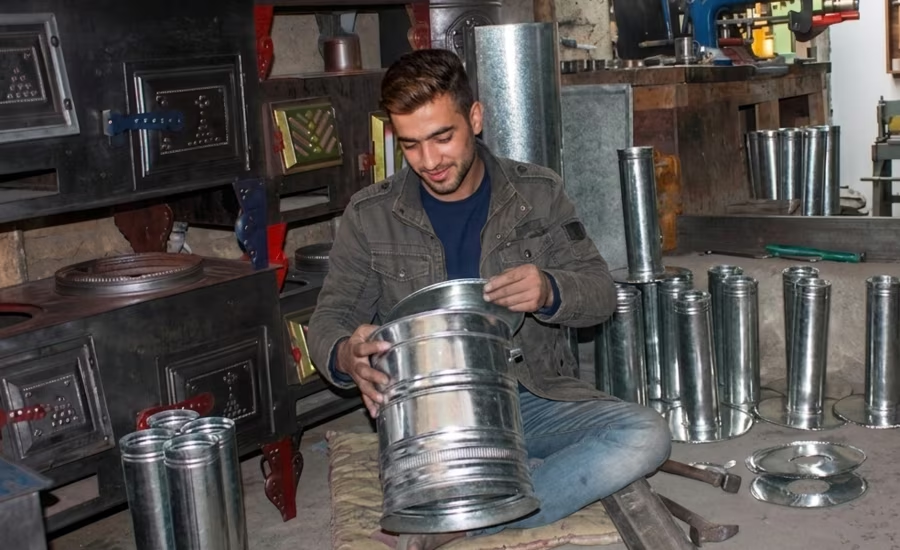
They are made and sold by local metalworkers, often directly from the same workshop where they are built. Sizes vary from small household units to large ones built for events or busy chai khanas.
The challenges
It takes time. A samawat is not fast. You light it, wait for the fire to build, wait again for the water to heat. It is not suited to situations where you need hot water immediately.
It needs attention. The fire has to be fed. Someone has to manage it throughout the day.
It produces smoke. In enclosed spaces, especially in winter, this becomes a problem.
It is heavy. A full samawat does not move easily. It is fixed in place.
Why people still use it
Electricity is unreliable. Power cuts in Afghanistan are frequent. The samawat runs on wood regardless of whether the grid is working.
It handles large volumes. For a chai khana or a gathering, the samawat produces hot water continuously for hours. A kettle cannot do this.
It is cheap to buy and easy to repair. Made locally, from basic materials, by craftsmen who are easy to find. No electronics to fail.
It is familiar. For most Afghans, the samawat is simply how tea is made. It is not a workaround — it is the default.
The tea tastes better. Many people believe water boiled in a samawat produces better-tasting tea. Whether that is the wood, the slow heat, or simply habit is hard to say — but it is a real reason some households use it even when an electric kettle is sitting right there.
The samawat and the samovar
The names are likely related — “samawat” and “samovar” — though which direction the influence traveled is not clear.
The underlying principle is the same. Both use a central chimney pipe fed with wood to heat a surrounding water chamber. A teapot sits separately for brewing a strong concentrate, then diluted with hot water drawn from the tap. The method is identical.
Where they differ is in purpose and form.
The samovar developed in Russia in the 18th century, where it became as much a display object as a functional one. Made from copper, brass, silver, or bronze — polished, engraved, shaped into urns or spheres — it marked wealth and status in Russian and Iranian households. It is an object people put on show.
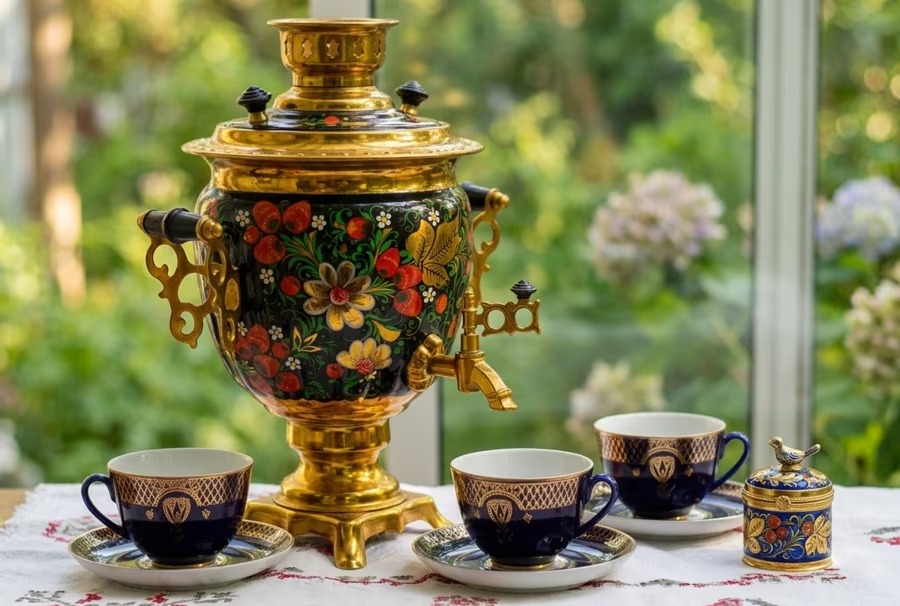
The samawat does not ask to be looked at. Made from halab (galvanized sheet steel) by local metalworkers, it is sized for output rather than appearance. Chai khanas and large gatherings need continuous hot water for hours — the samawat is built for that, not for a shelf. No ornamentation. No collector’s market.
The samovar also exists today in electric form. The samawat has not made that shift — in part because reliable electricity in Afghanistan is not something you plan around.
Same function. Same tea method. Very different objects.
Built for how things actually are
It needs no electricity and no gas. In a country where both can run out, that is a practical advantage — not a compromise.
It is also a good example of how everyday objects in Afghanistan tend to work: built locally, repaired locally, and suited to the actual conditions people live in.
Do you have a comment or something to share? contact us: info@aboutafg.com