Before sunrise each autumn, women in Herat’s fields bend to pick crocus flowers by hand. The three red threads inside each blossom — dried and sorted — become Afghanistan’s most valuable export by weight: saffron.
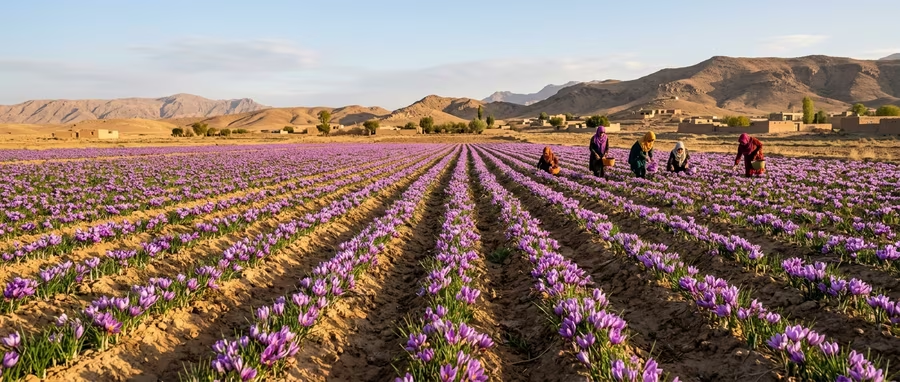
The global saffron market is dominated by Iran, but Afghanistan’s share has grown steadily over the past two decades, driven almost entirely by Herat. What sets Afghan saffron apart is not just quantity — it is a consistent quality in a product where that is genuinely hard to achieve.
A Decade of Awards, and the Lab Data Behind Them
Herat saffron has won the International Taste Institute competition in Brussels — judged on flavor, aroma, and color — ten consecutive years in a row.
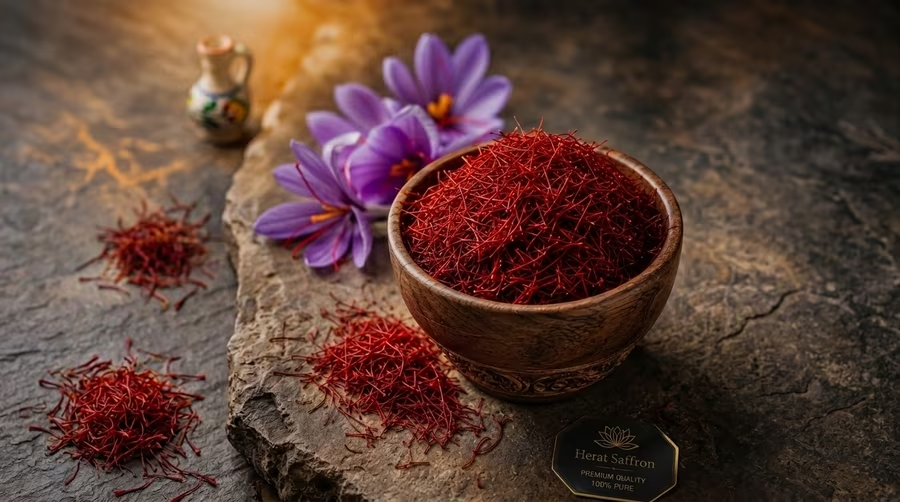
A 2024 comparative study published in Advances in Horticultural Science helps explain the streak. It tested saffron from Herat against samples from Torbat Heydarieh, one of Iran’s major saffron-growing districts, measuring the same three compounds graders look for: crocin (color and staining strength), picrocrocin (bitterness and flavor), and safranal (aroma).
Herat’s samples averaged 279.1 on crocin, against readings as low as 164 in some of the Iranian samples tested — the top-performing Herat district, Zendeh Jan, reached about 303. Iranian samples came out narrowly ahead on safranal (34.2 versus roughly 33). In plain terms: Herat’s threads tend to release a noticeably deeper, stronger color when steeped — a real, measurable difference behind a decade of first-place finishes.
A flower with three threads
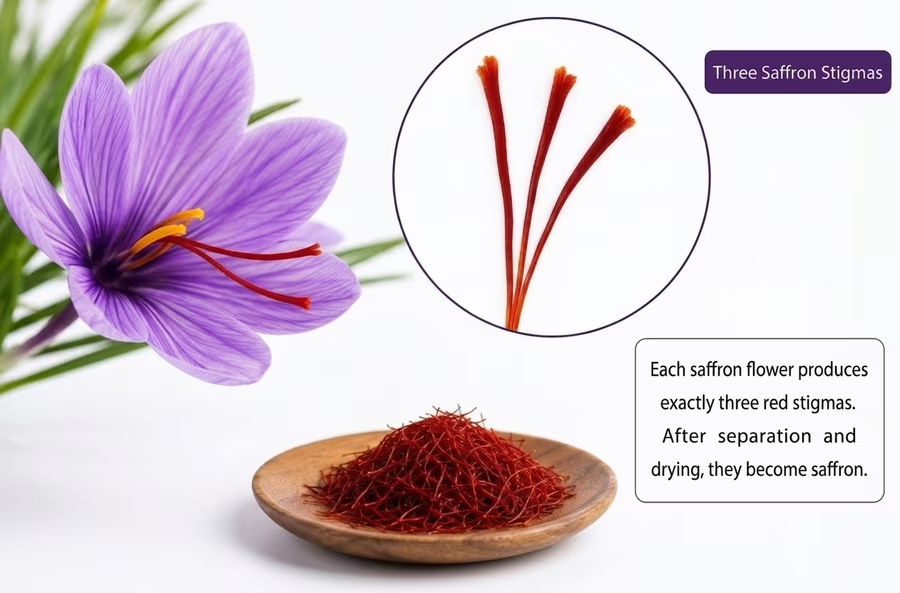
Saffron comes from Crocus sativus, a perennial bulb that flowers once a year, in autumn. Each purple blossom contains exactly three stigmas — the red filaments at the center. These are plucked by hand and dried. Once dried, they are saffron.
That is all there is to it, but the scale makes it demanding. To produce one gram of dried saffron, between 150,000 and 200,000 flowers must be harvested and processed. That labor — not the plant, which grows readily wherever the climate suits it — is what makes saffron the most expensive spice in the world.
Herat and the fields beyond
Herat province in western Afghanistan is where the overwhelming majority of Afghan saffron is grown. The cold winters, dry summers, and well-drained soils there suit the crocus, and farmers in the region have built up generations of knowledge around the crop.
Saffron cultivation has since spread to at least 25 other provinces, and national output has roughly doubled in three years. Herat still accounts for around 95% of total production.
| Year | National production | Herat’s share |
|---|---|---|
| 2022 | ~20 tonnes | ~90% |
| 2023 | ~23 tonnes | ~90% |
| 2024 | ~40–46 tonnes | ~90% |
| 2025 | ~41 tonnes | ~95% |
Source: Afghanistan Ministry of Agriculture, Irrigation and Livestock (MAIL)
Harvested by hand, before sunrise
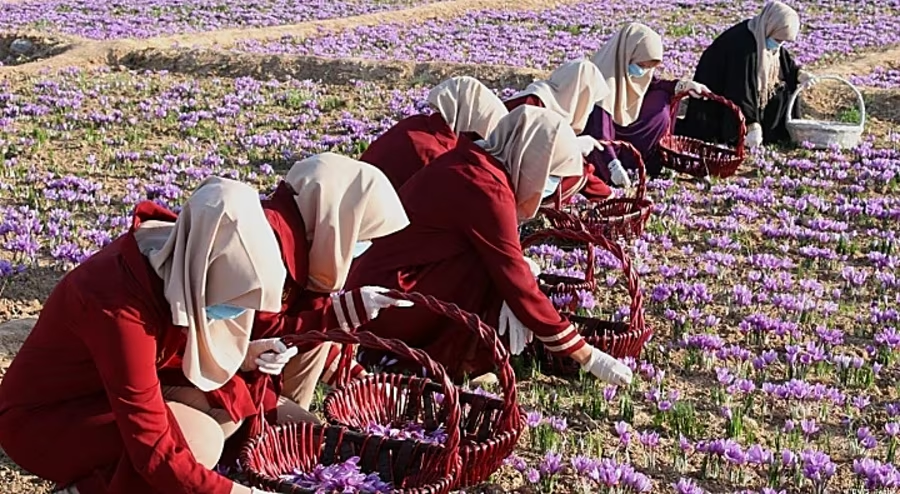
The harvest window is narrow. Crocus blooms appear in October and November, and the flowers must be picked before they open too wide — early morning, before sunrise, when the petals are still cool and the stigmas undamaged.
Women do most of this work, moving quickly through the rows before the day warms up. Once the flowers are collected, the stigmas must be separated from the petals by hand — a precise task that cannot be mechanized without damaging the threads. Then they are dried and sorted for quality.
This work happens in fields and homes across Herat’s saffron districts, keeping income within rural communities. For many families, it is a significant part of household earnings.
What it is used for
In the kitchen, saffron gives rice, broth, and sweets a golden color and a faintly floral flavor. In Afghan cooking it appears in rice dishes, desserts, and tea.
Beyond cooking, saffron has long been used in traditional medicine. It is also used in cosmetics and perfumery, and its active compounds — crocin, safranal, and picrocrocin — have drawn interest from pharmaceutical researchers.
Today
Afghanistan is among the world’s top saffron producers, and Herat’s crop reaches export markets across the Middle East, Europe, and beyond. Output continues to grow as cultivation spreads to more provinces.
The industry still depends on hand labor and family-scale farming. That limits how fast it can scale, but it also means the income from each harvest is spread across the hundreds of thousands of hands it takes to bring the crop to market — which in Afghanistan’s rural economy is not a small thing.
If you know the saffron harvest from the inside — as a grower, a buyer, or someone who grew up near the fields — we’d like to hear what you know.
Do you have a comment or something to share? contact us: info@aboutafg.com