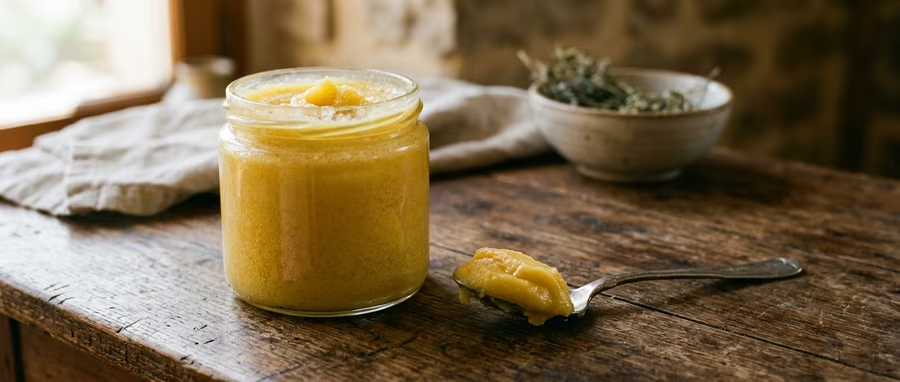
Roghan zard — literally “yellow oil” — is one of Afghanistan’s oldest dairy staples, made the same patient way it always has been: milk turned to yogurt, yogurt churned to butter, and butter slowly boiled down to rich, golden clarified butter.
What it is
Roghan zard is made from the natural butter of cow, sheep, or goat milk. Its color is yellow, though the exact shade shifts with the type of milk and the season — sometimes lighter, sometimes darker. It has a natural, pleasant aroma and flavor, and unlike plain butter, it keeps for a long time without spoiling.
It’s a good source of energy and contains fat-soluble vitamins A, D, E, and K. Eaten in moderation, it’s said to support bone health and the immune system, and the natural fats in it are also valued for skin and hair.
What goes into it
The ingredients are simple and few:
- Milk
- Cold water
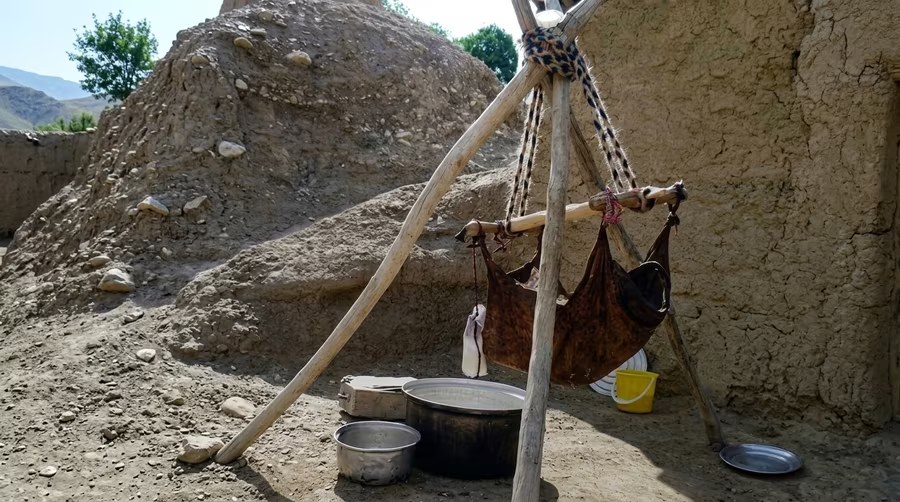
- A mashk (a traditional churn made from animal hide)
- Yogurt
How it’s made
The process starts with fresh milk, strained through a cloth to remove any debris. The strained milk goes into a pot over heat and is brought to a boil, then poured into another container to cool — not all the way, just enough that it won’t burn the hand, a little warmer than lukewarm. At that temperature, a skin forms on the surface of the milk.
Separately, some yogurt is beaten well until it loses its firm set, then stirred into the cooled milk. The mixing is done carefully from one side with a spoon, enough to blend the yogurt through the milk without breaking the skin that formed on top. The container is then wrapped tightly in a blanket and left undisturbed while the milk turns to yogurt.
Once that yogurt has set, it’s poured into the mashk and left for a day or two to sour, which makes the next step easier.
Churning the mashk
After a day or two, the mashk is rocked back and forth. In winter, this is often done somewhere warm, like next to a tandoor — the clay oven Afghan households also bake their bread in. At first the churning is vigorous, and cold water is added inside the mashk, until small flecks of butter start to form. Once those flecks appear, the churning slows down so the pieces can gather together into larger clumps.
Those clumps are the butter — maska — and they’re lifted out and separated from the buttermilk (dogh) left behind. The butter goes into another pot over heat and is brought to a boil. As it boils, foam rises to the top and is skimmed off with a spoon. What settles at the bottom of the pot once the foam is removed is the finished clarified butter — roghan zard.
In short, the chain runs: milk → yogurt → buttermilk → butter → roghan zard.
What it’s used for
Roghan zard’s most common use is in the kitchen — worked into rice dishes, stews, and pastries in place of vegetable oil or fresh butter, prized for the rich flavor it adds. Because it keeps far longer than ordinary butter, it has traditionally been a way for rural households to store the richness of a milk surplus for months rather than days.
Today
The full process — souring, churning, and slow boiling — takes real time and is still kept alive mostly in villages and among families who keep livestock, rather than in city kitchens. Store-bought oils have made it less of a daily necessity, but roghan zard hasn’t disappeared: it still shows up at family tables, particularly around special meals, as something made the way a grandmother would have made it.
If your family still makes roghan zard at home, or you remember watching a mashk being churned, we’d like to hear about it.
Do you have a comment or something to share? contact us: info@aboutafg.com