In this post, we are talking about paid passenger transport in Afghanistan. It can be divided into three broad categories: air travel, inter-city road travel, and inner-city transport. This post focuses on the third category: the vehicles people use every day inside cities.
In most Afghan cities, urban transport has never worked through fixed timetables, route maps, or formal stations. People usually learn it by habit: where to wait, which vehicle to take, how much to pay, and when a route is likely to move.
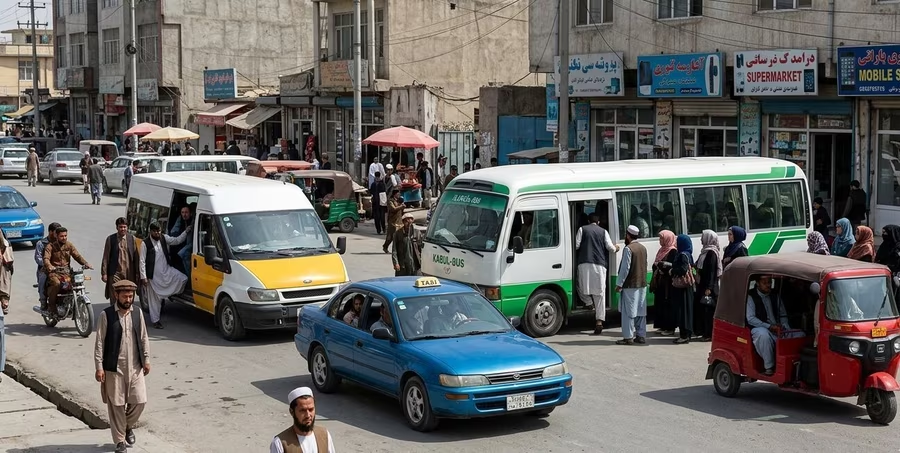
The main types of city transport people pay for
The most common options have included:
- Government buses, once known as Milli Bus
- Coasters, or minibuses
- Vans such as Flankoj and Tunis
- Fixed-route 4-seaters (similar routes as vans)
- Private taxis (custom route)
- Motorized rickshaws
Each of these served a different price range, distance, and passenger load.
1. Milli Bus, the old government bus system
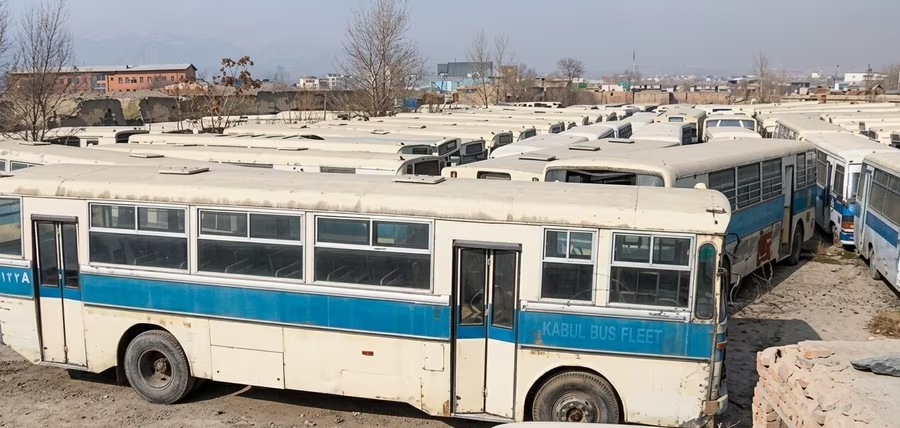
The government-run bus system, usually called Milli Bus, no longer operates. The government entity responsible for it, Tasadi Milli Bus, reportedly spent more than it earned for years, and the system was eventually shut down.
When these buses were still running, they were the cheapest way to travel. Around 2005, a fare was about 2 AFN. A few years later it rose to about 5 AFN. A typical route covered roughly 7 kilometers, more or less. By around 2012, the buses had largely disappeared.
Two people usually worked on each bus:
- The driver, who drove the vehicle and was effectively in charge
- The cleaner, who assisted the driver and did much more than cleaning
The cleaner usually handled most of the work with passengers:
- Collecting fares after people boarded
- Calling out to the driver when someone wanted to get off
- Standing at the open door, watching the roadside for potential passengers, and shouting to the driver to stop
There were well-known bus stations, but they were informal. People knew them by habit, not by signs or official route maps. The most important points were the start and end of the route. Mid-route stops existed, but in practice they were less important.
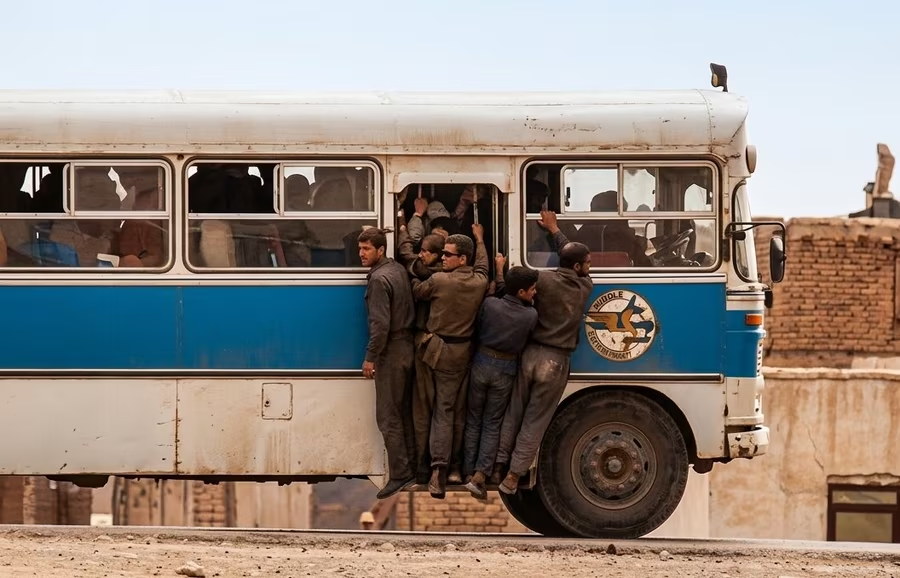
There was no fixed schedule. Drivers often waited until the bus was almost full before leaving because they had to pay a set fee per trip to the government and kept the remaining income themselves. As a result, buses were often packed. Passengers filled not only the seats but also the central aisle, and at times people even rode at the doorway while the bus was moving, with only one hand and one foot inside and much of the body outside the bus.
Seating was also divided by gender:
- The front section was for women
- The back section was for men
Here, in the name Tasadi Milli Bus, Tasadi refers to a government entity that is meant to generate income, same as Afghanistan Breshna Sherkat in the electricity sector.
2. Coasters and minibuses
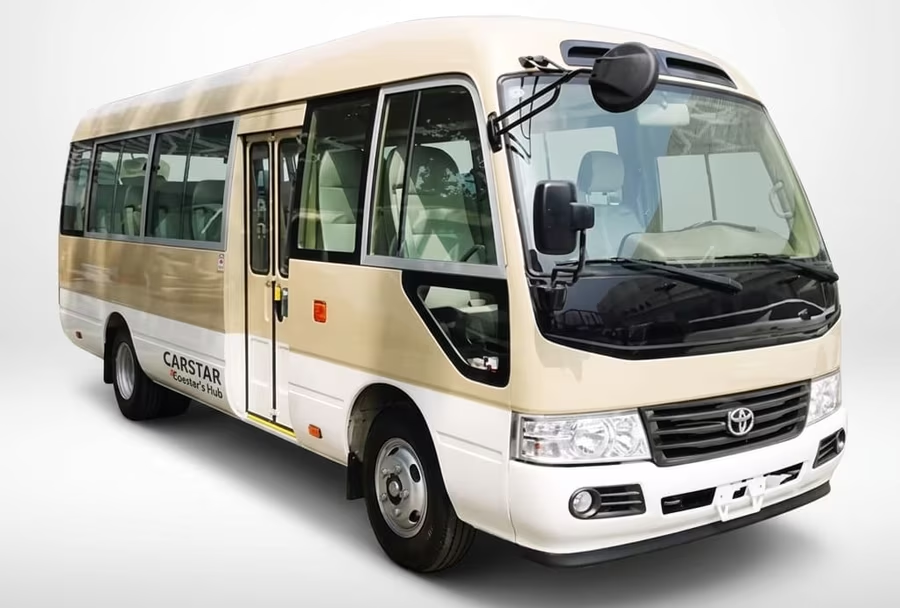
Coasters, often pronounced more like “caster” in Afghanistan, were smaller privately owned versions of buses. They operated alongside government buses and gradually became one of the most common urban transport options. Older minibuses existed earlier, and by around 2008 newer coasters became more common. They were roomier than older minibuses, with higher ceilings and larger windows.
Despite their size, they were often heavily overcrowded. A coaster could carry around 50 people when full, which was far beyond comfortable capacity.
Their fares were usually:
- 5 AFN for a short route
- Double fare for a longer route, often around 7 kilometers
In daily operation, coasters worked much like the old government buses:
- Drivers and cleaners worked together
- Stops were informal and based on local habit
- There was no fixed timetable
- Departure usually depended on whether enough passengers had boarded
- Women sat toward the front and men toward the back
3. Vans: Flankoj and Tunis
Vans were another major part of urban transport. All were privately owned and all were Toyota models. Larger vans were commonly called Flankoj, while smaller ones were known as Tunis.
The usual fare was around 10 to 15 AFN. Many van routes went up to about 7 kilometers, but some full routes were as short as 1 or 2 kilometers and still charged the same fare.
Like minibuses and coasters, the larger of these vans, the Flankoj, was often modified to fit more passengers than the original vehicle design intended.
Flankoj
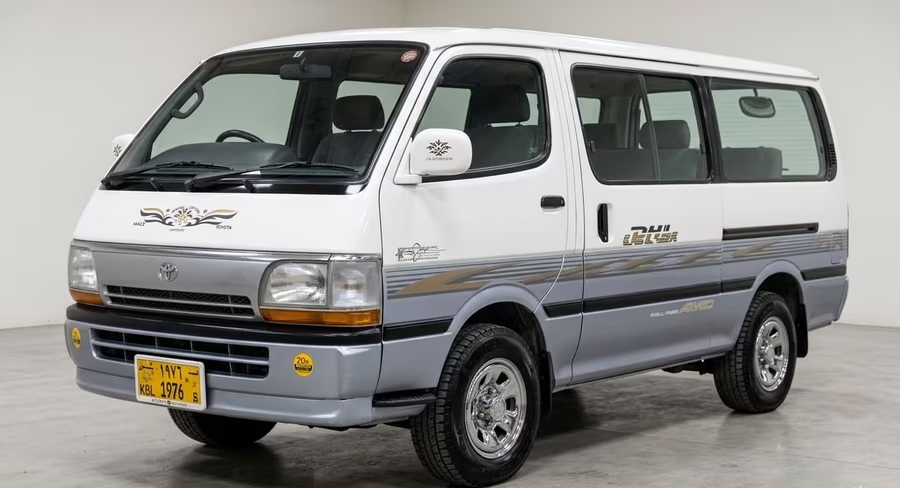
Flankoj vans were usually altered internally: the factory seats were replaced with custom-built ones that took up less space but were less comfortable, and the plastic panels lining the interior were swapped for a thinner cover that hid the raw metal frame but no longer cushioned against it. Only one extra rear seat was added, usually as a reverse-facing seat in the trunk area. A common arrangement was:
- 2 passengers beside the driver
- 2 passengers on a reverse-facing seat behind the front area
- 8 passengers across two rear bench seats
- 4 passengers on a reverse-facing seat in the trunk area
That brought the total to around 16 passengers.
Tunis
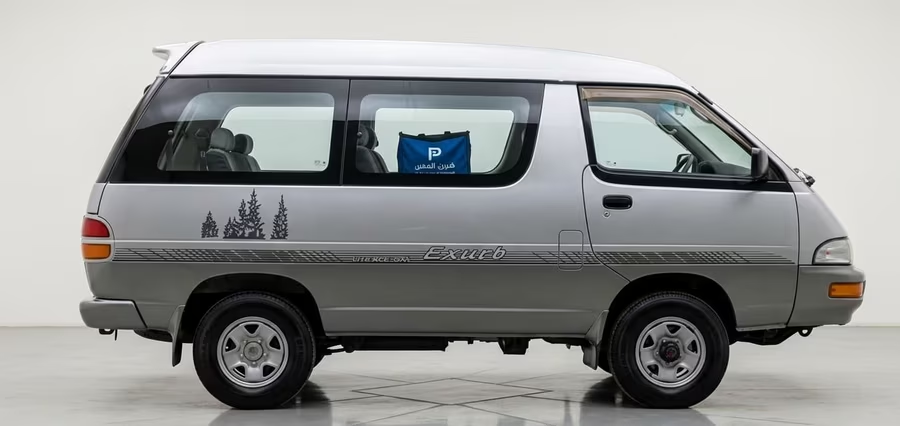
Tunis vans were not modified the same way. They kept their factory seats and simply did not have the rear trunk seat found in Flankoj. A typical passenger count was:
- 2 beside the driver
- 2 on a reverse-facing middle seat
- 8 across two rear seats
That meant around 12 passengers in total.
Some vans had cleaners, but not all of them.
4. Fixed-route 4-seaters
Another common transport type was the fixed-route 4-seater. These usually traveled routes similar to vans, but charged more, often around 20 AFN.
Despite the name, a “4-seater” did not literally carry only four passengers. In practice, four people could squeeze into the back seat, and two more sat beside the driver, making six passengers in total.
5. Private taxis (custom route)
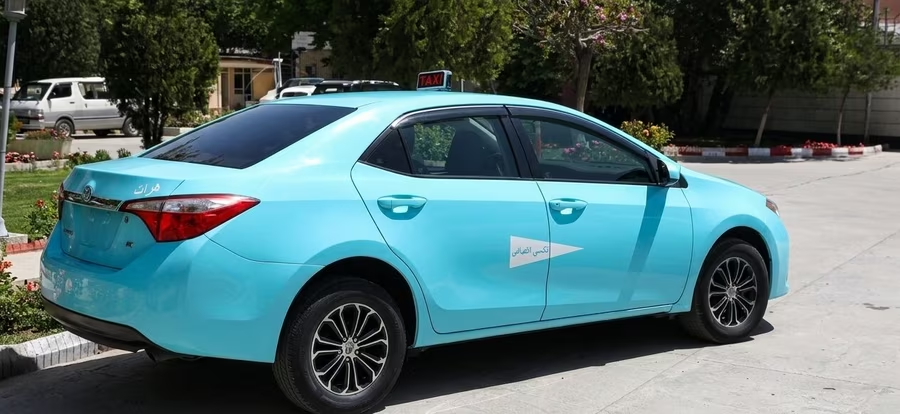
Private taxis could be found almost anywhere in a city. Current Afghan taxis are usually blue, although many private car owners also worked informally as taxi drivers to earn extra income.
On routes commonly served by vans and fixed-route cars, a private taxi might charge around 150 AFN for a ride. For custom trips, the price was usually negotiated on the spot.
Unlike other forms of shared transport, taxis offered flexibility rather than fixed routes.
6. Motorized rickshaws
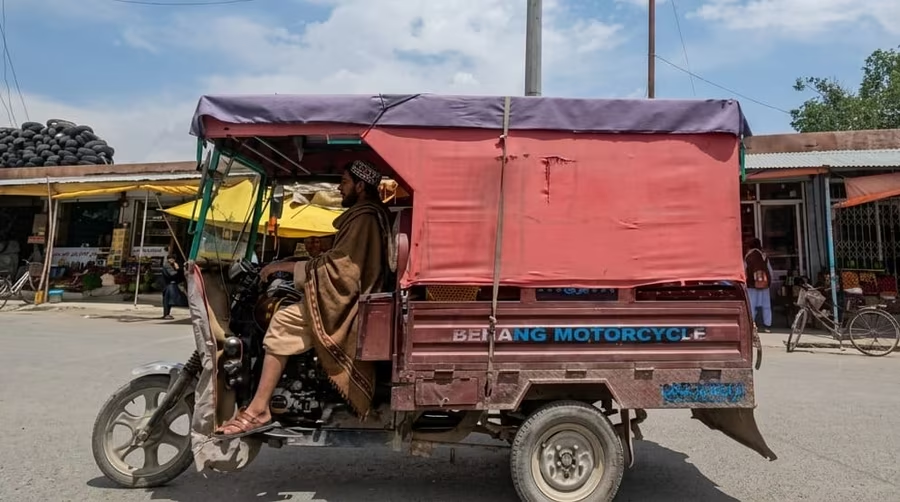
Motorized rickshaws were another low-cost option for short urban trips. These were essentially motorcycles modified with an attached passenger section, turning them into compact transport vehicles.
They usually covered only 1 or 2 kilometers and commonly charged about 5 AFN. A rickshaw might carry around 8 people:
- 4 in the back
- 3 in the middle section
- 1 beside the driver in some cases
Shared features of the system
Although these vehicles were different, the overall system had several things in common.
1. No fixed schedule
Shared transport in Afghan cities generally did not follow a timetable. Vehicles left when enough passengers had boarded.
2. Availability changed a lot by time of day
Getting a ride also depended heavily on the hour. In the early morning, before sunrise and around morning prayer, it was always easier to find a vehicle. That often continued until around 6 AM.
After that, especially from around 6 AM to 8 AM, things became much harder. That was the time when office workers, university students, and schoolchildren were all trying to travel at once. During those hours, it could be very difficult to find a ride. People often had to run toward any van or coaster as soon as they saw it, otherwise they could be left behind.
At the same time, the roads themselves became heavily congested. During the morning rush and again when people were returning home, traffic jams could become severe. A route that might take only 20 minutes in the early morning could take around one and a half hours during peak time.
After 8 AM, things usually started to calm down again. Later in the day, the pressure would rise once more when people were returning home in the evening.
3. Fixed routes, except for taxis
Most shared transport options, other than taxis, followed fixed routes. These routes usually did not have long overlaps and not always well connected to each other. That meant a passenger often had to change vehicles more than once to get from one place to another.
4. Vehicles were modified to fit more people
Minibuses often had less space between seats so more people could fit. The larger Flankoj vans were rebuilt with custom seats and a thinner interior lining to fit extra benches; the smaller Tunis vans were not modified this way. The goal was simple: carry more paying passengers.
5. Limited comfort
Passengers generally traveled without air conditioning in summer and without heating in winter. Drivers often had access to heating, but passengers usually did not.
6. Gender separation was common
In minibuses and coasters, women usually sat in front and men in the back. In other transport types, passengers were also often separated by gender unless they were close relatives such as a husband, brother, or son traveling with a woman.
7. Social norms mattered
It was common for younger passengers to give their seats to older people, especially in minibuses and coasters.
8. Transport work was male-dominated
Drivers and cleaners in shared transport were always men.
What this says about daily life
Inner-city transport in Afghanistan has never been only about getting from one place to another. It also reflects how daily life works in the country: informal systems, overcrowding, limited comfort, and strong social habits around age, gender, and routine.
For people who grew up with it, the system was familiar even when it looked disorganized from the outside. Local knowledge mattered as much as the vehicle itself.
Do you have a comment or something to share? contact us: info@aboutafg.com