Namad (نمد) is one of Afghanistan’s oldest crafts. Unlike a carpet or a buria, it needs no loom, no shuttle, and no knots. Raw wool, hot water, and sustained pressure are all it takes — and several hours of collective effort from the women of a village.
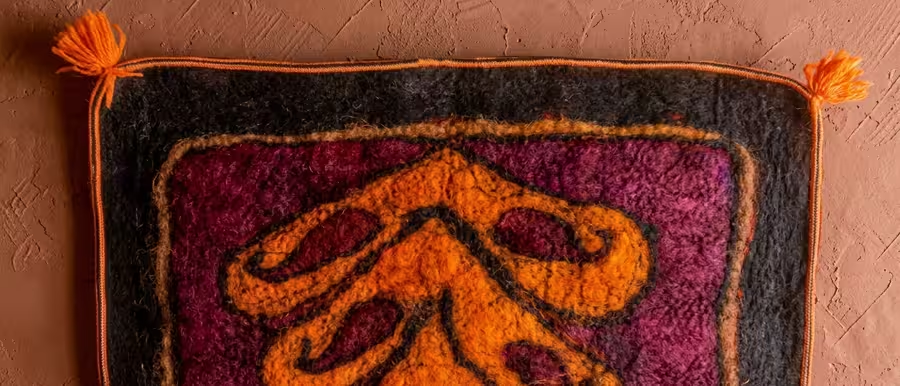
Namad is felted — wool fibers matted together through heat, moisture, and friction until they interlock and form a solid, dense surface. No thread holds the structure together. The fibers hold each other. Felt is believed to be one of the oldest textile techniques in the world, predating both weaving and knotting, and Afghan namad sits at that ancient end of the tradition — alongside similar felt crafts found across Central Asia, Iran, and the Caucasus.
What a namad looks like
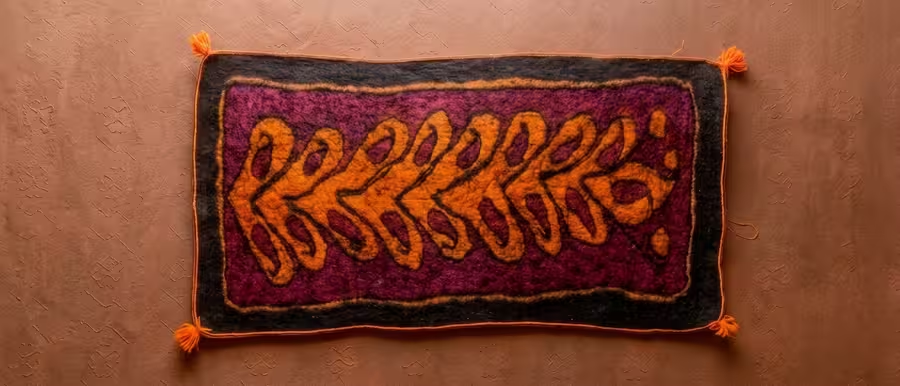
The finished mat is firm and dense, with a slight texture on the surface. It can be made in a single color — most often dark, using naturally dark or black wool — or decorated with geometric patterns in contrasting colors: white, grey, and shades dyed beforehand.
The border — called qiq (قیق) — is sewn around all four sides after the mat has dried. It is made from spun thread, usually from the same short-fiber wool separated out during preparation.
Materials
Wool — sheep’s wool, sheared twice a year, once in spring and once in autumn. Afghan sheep produce a dense fiber that felts well.
Hot water — used together with sustained pressure to bind the fibers into felt.
Thread — for sewing the border around the finished mat.
How it is made
The process has several stages, each requiring its own skill.
Washing the wool
After shearing, the raw wool goes into a large basin of water and soaks for about two hours. A woman then lifts out handfuls from the basin, places them on a flat stone, pours water over the wool with one hand, and beats it gently with a smooth stick — called doka-pashm-shoy (دوکه پشم شوی), the wool-washing stick — with the other. This drives the dirty water out and cleans the fiber. The washed wool is spread on a flat surface to dry in the sun.
Separating and teasing
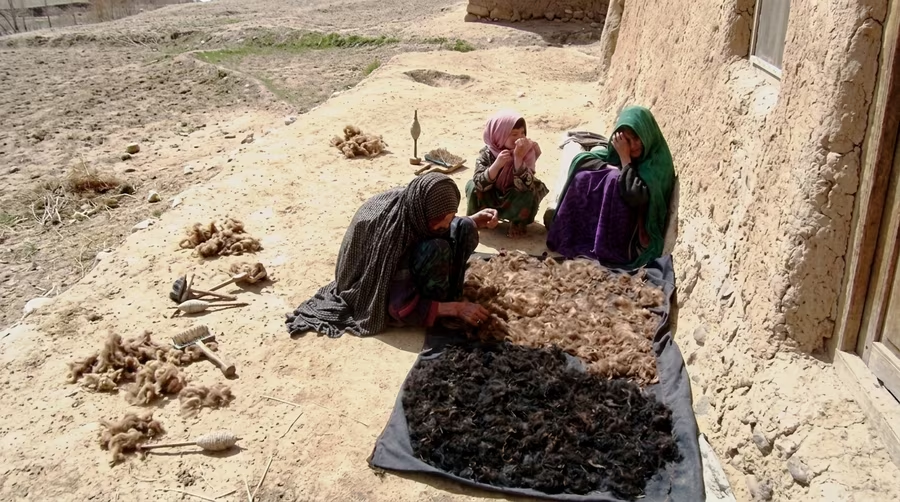
Once dry, the wool is sorted. Long-fiber wool — the good wool, used for the namad itself — is separated from short-fiber wool, which is set aside to be spun into the border thread.
Both grades are then beaten with a thin, smooth stick called chob-chag (چب چگ) to break apart the clumps and open up the fibers. This step — teasing the wool — is what allows it to felt evenly.
Combing
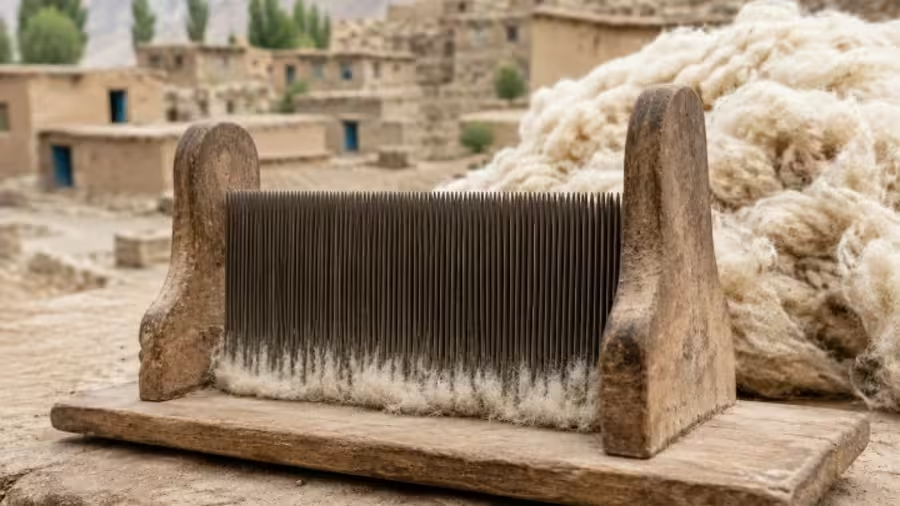
After teasing, the wool is combed with a shaane-pashm (شانه پشم) — a wooden wool comb — until the fibers are fully aligned and ready to felt.
Laying the design
On the day the namad is to be made, women from across the village gather. A large cloth is spread flat on the ground. One woman who knows the technique — not everyone does — lays the prepared wool on the cloth, distributing it flat and even across the full surface. When the base layer is done, colored wool is arranged on top according to the intended design.
If the main wool is dark — black or near-black — the design colors are typically white, steel-grey, and shades the women have dyed themselves beforehand, most often a soft rose or pink.
Felting
The cloth and the wool together are rolled up tightly into a cylinder. Hot water is poured over the roll. Three or four women then take turns pressing and massaging the roll with their forearms — a rhythmic back-and-forth motion — while another person continues pouring hot water over it. The work is rotated so no one tires out.
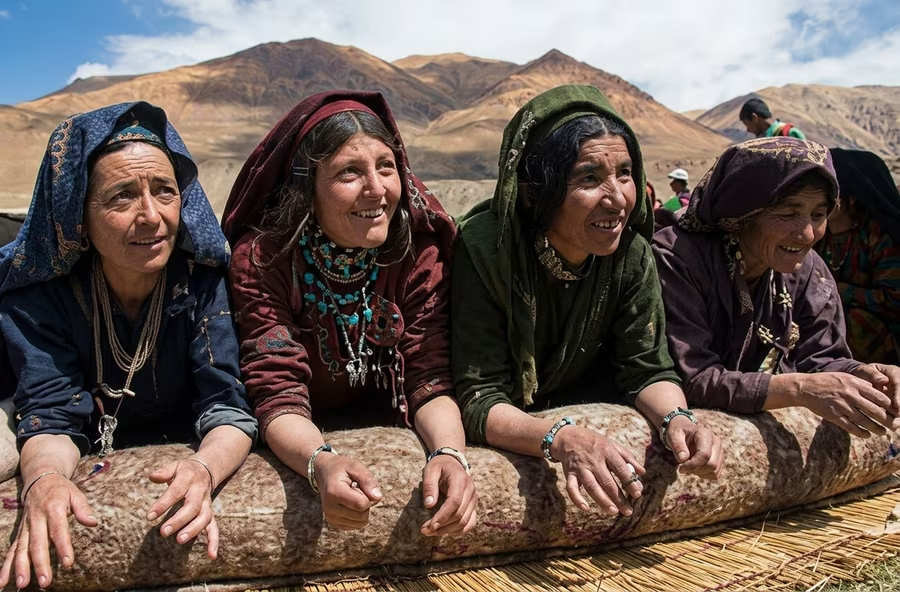
This continues for three to four hours. The heat and sustained pressure cause the wool fibers to lock together permanently. When the process is complete, the roll is unrolled — and what was loose wool has become a solid, patterned mat.
Finishing
The namad dries in the sun. Once dry, the edges are trimmed with scissors to make them even. The border is then sewn around all four sides.
What it is used for
- A sleeping surface — namad is noticeably firmer than a mattress, and people with back pain reportedly find it more comfortable for sleeping
- Floor covering in homes and mosques, used in place of a carpet
- Seating in guest rooms and gathering spaces
- Sold at local markets, and in some cases exported — Afghan namad has reached markets in Iran, Pakistan, Turkey, Germany, the UK, and the United States
The community side
Namad-making is not a solitary craft. The felting stage requires multiple pairs of hands, and the gathering itself — women from across the village coming together for a full day of work — is part of how the knowledge stays alive. Younger women learn by watching and taking their turn at the roll.
Today
Spinning machines and manufactured floor coverings have reduced the demand for handmade namad in many areas. Knotted carpets, once far harder to acquire, are now more accessible and have replaced namad in many homes.
The craft has not disappeared, but the people who still make it are mostly in rural areas where the knowledge has stayed within families. In some communities, namad is still the floor covering of choice — practical, warm, and made from what is already at hand.
Do you have a comment or something to share? contact us: info@aboutafg.com