The khurjin is one of the most practical objects rural Afghanistan has produced — a double-pocketed wool saddlebag, woven flat on the ground and then folded and stitched into shape. It travels to the field, the market, the mill, and back, draped across the back of a horse or donkey — and increasingly, hanging from a bicycle or motorcycle too.
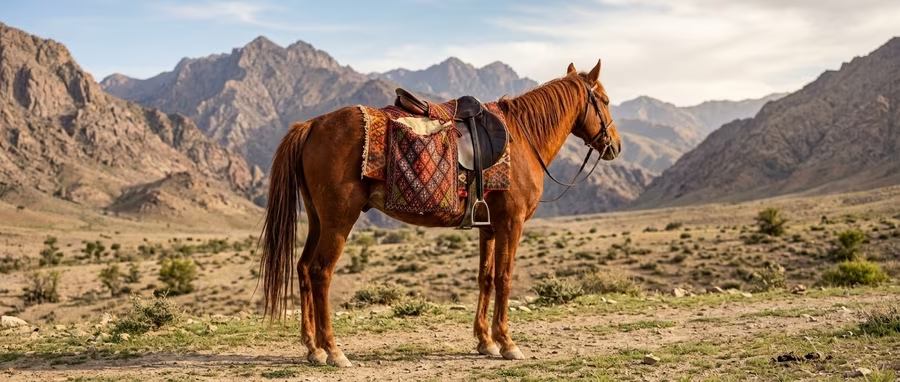
What it is
A khurjin is a woven wool carrier — a single long rectangle folded over an animal’s back, creating two large open pockets that hang down on either side.
Rural families use it whenever something needs moving by animal: seed grain heading to the field, bread or lunch to a worker, wheat or barley to the mill, or household supplies back from the market. Woven from wool, it is durable, weather-resistant, and repairable.
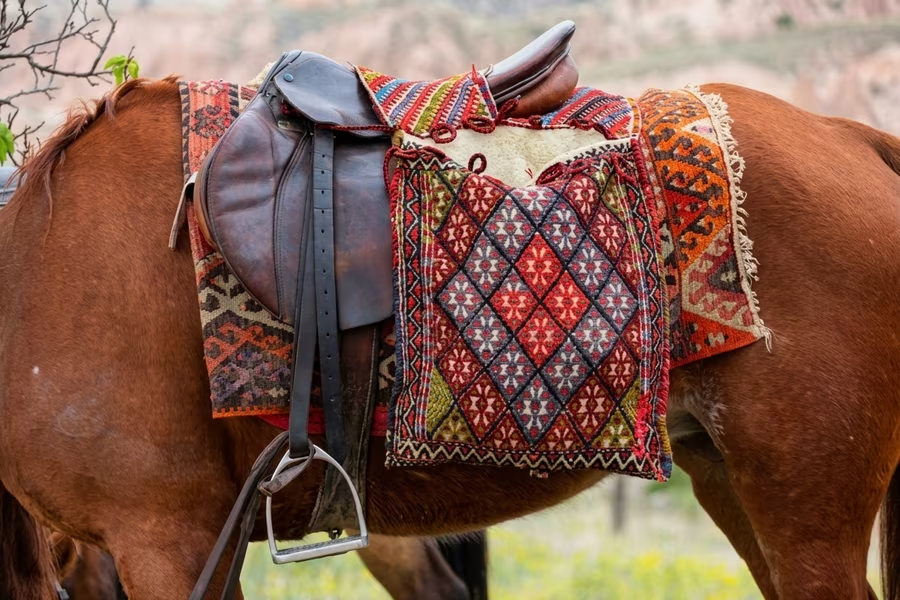
Materials
Three types of thread go into a khurjin, and each has a specific role.
Warp thread: the structural backbone of the piece, running the full length of the loom. It is made from a blend of goat and sheep hair, spun together and plied twice for strength so the threads do not unravel during tensioning.
Weft thread: made from pure sheep wool, woven back and forth to build up the fabric and create patterns. It is prepared in four standard colors — black, white, brown, and steel grey — each color spun separately and wound onto a narrow weaving stick for use.
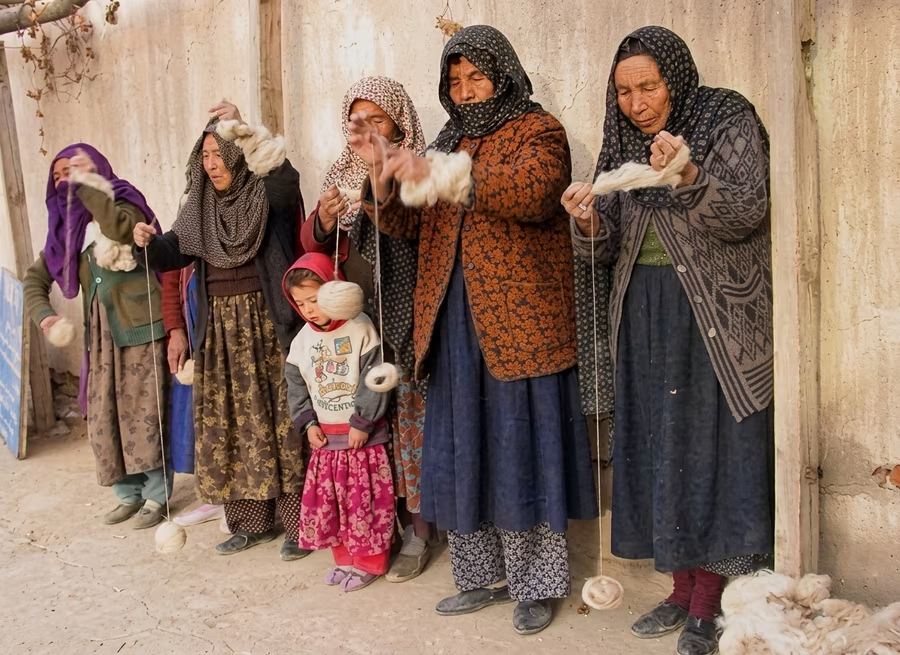
Both threads start the same way: the wool is washed, dried, and sorted — good fleece separated from poor — then beaten with a thin stick to open up matted fibers, then combed before spinning.
The loom
The khurjin loom is a flat ground loom, built from wooden stakes and poles on any level, open surface. Setting it up takes four people working together.
Four long sharpened wooden stakes are driven into the ground in a rectangle — two pairs set apart in width and length to match the intended size of the khurjin. Two long crossbars rest behind the stakes at each end, raised slightly off the ground so the warp threads can pass freely underneath.
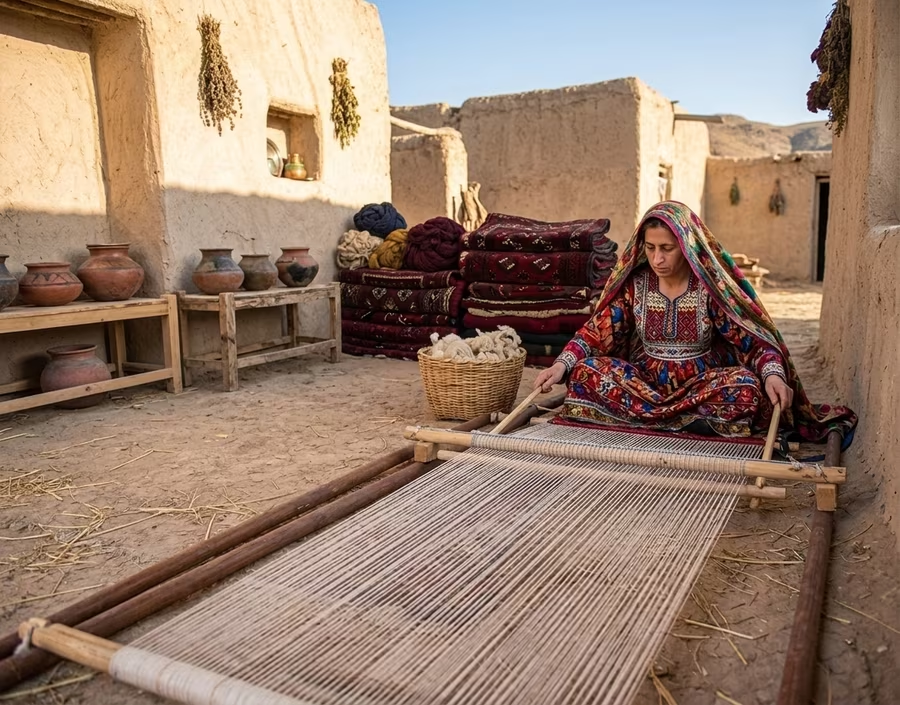
The warp threads are then strung by looping a thread from one end beam to the other and back, over and over, until the full width is filled. Two women sit at the end beams to regulate the spacing; two others walk the thread back and forth between them.
Once the warp is in place, two wooden rods are lashed across it: a thick round rod on top, and behind it a flat shed stick inserted beneath alternate warp threads, creating two layers that the weft can be woven through. The shed stick has forked handles at each end so it can be opened and closed with a single motion.
Weaving and finishing
With the loom ready, a weaver opens the shed by pulling the shed stick forward, passes the weft thread from one side to the other, then closes the shed and beats the new row down with a comb — the same style as a carpet-weaving comb. She then opens the shed in the opposite direction and repeats. This is the full weaving cycle.
To keep the width from narrowing as work progresses, a pointed stick cut to exactly the width of the khurjin is kept tucked inside the cloth and moved forward every few rows.
Patterns are woven in by introducing colored weft threads at the right point in the sequence. The weaver decides where each color begins and ends.
When the weaving is complete, a length of unfinished warp thread remains at each end. These are trimmed away and folded under. The woven piece is then folded and the two open sides are stitched shut, creating the two pockets. The center section is left unstitched — that is the part that rests on the animal’s back.
Today
The khurjin is still made in rural areas of Afghanistan, where pack animals remain part of daily farming and transport. In villages where the skills survive, the knowledge sits primarily with older women. The craft passes through families — daughters and granddaughters learning by watching and helping — but that transmission has become less reliable as younger generations leave for cities.
The skill is not easy to replace. A well-made khurjin is a substantial piece of work — the loom setup alone requires a group, and the weaving, start to finish, takes days. For the families that still use them, the effort is worth it.
Do you have a comment or something to share? contact us: info@aboutafg.com