Few pieces of Afghan dress have travelled as far as the karakul. It has sat on the heads of rulers and presidents in front of international cameras, and on the heads of men in market stalls who have never thought twice about it.
The name
The word karakul (قره قل) comes from Turkish: kara meaning black, and kul meaning lake. It refers both to the hat and to the breed of sheep whose skin is used to make it — a breed named after Qorako’l, a town in Uzbekistan’s Bukhara region. The town itself takes its name from a lake known by that same Turkic name since at least the 8th century.
There is a Wikipedia article on the karakul hat. It covers the broader regional picture — trade names, international wearers, the hat’s life beyond Afghanistan. This post approaches it from closer in: the Afghan context, the craft, and the sheep behind it.
What it means to wear one
In Afghanistan, the karakul is not simply a hat. It carries meaning. Putting one on at a formal occasion signals respect for tradition and cultural continuity. For much of the twentieth century it was also a marker of authority — worn by rulers, presidents, and senior officials who wanted to appear rooted in Afghan identity.
Mohammad Zahir Shah and Hamid Karzai are among the most prominent figures associated with the hat. Karzai’s karakul became one of the most photographed pieces of Afghan dress internationally, making it recognisable far beyond Afghanistan’s borders.
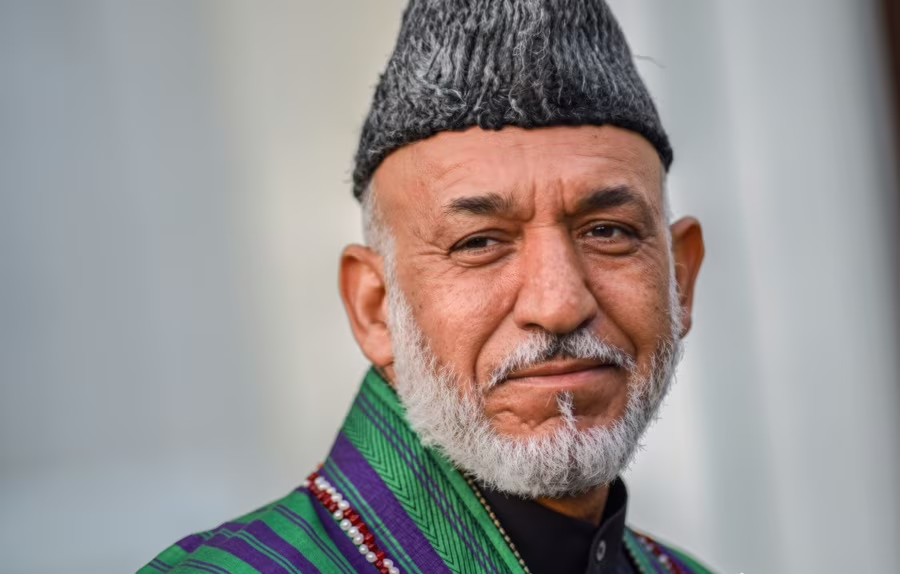
Younger Afghans wear it less than older generations did. It remains common among tribal elders and men at formal occasions.
Regions where the karakul is most present include Kabul, Herat, Mazar-i-Sharif, and Sheberghan.
Types
By colour
- Black — the most common and the most prized in Afghanistan
- Grey — less common but appreciated for its soft texture
- Brown — seen in some regions
- White — very rare and considered particularly special
By shape
- Round and low — the standard Afghan style, worn at formal occasions
- Tall — more common in parts of Central Asia
- Flat or curved — an older, more traditional form
By skin quality
- Soft and tightly curled — made from newborn lamb skin; this is the luxury tier and commands high prices
- Standard — lower quality skin, suitable for everyday use
- Composite or industrial — used to produce lower-cost versions
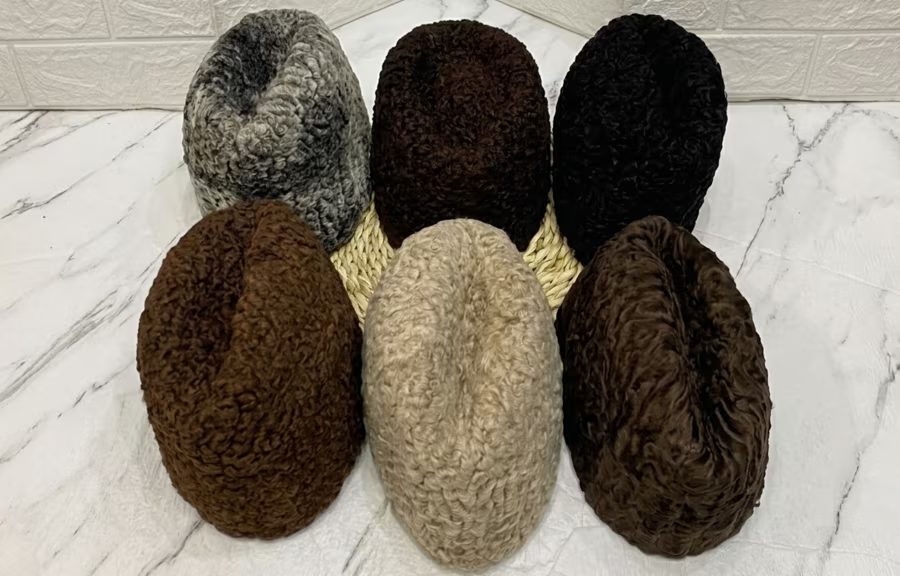
How it is made
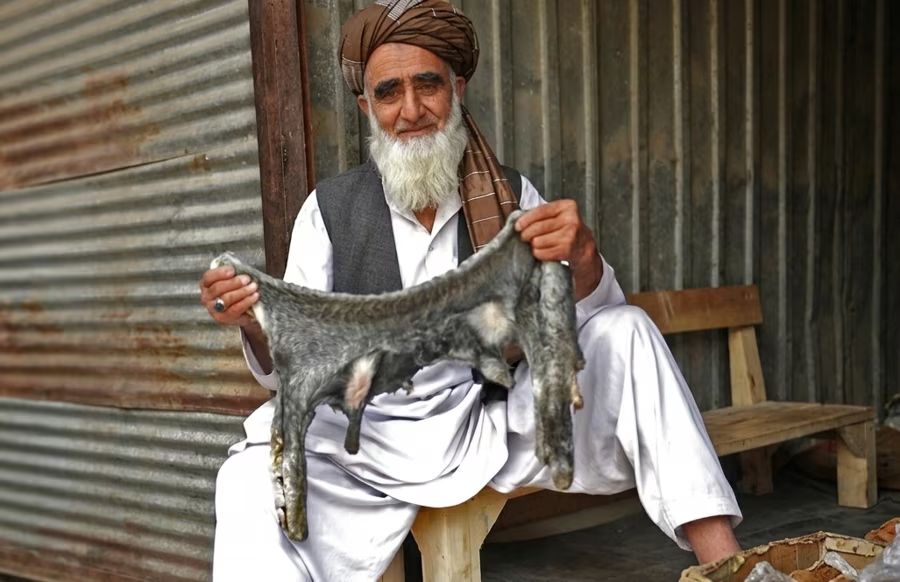
The process is skilled work. It begins with the skin of a karakul lamb, which is then tanned — softened and treated until it is durable and pliable. The tanned skin is cut to the shape of the hat, then hand-sewn and pressed into its final form.
Getting the shape right requires experience. The surface needs to be even, the seams tight, and the fur consistent in direction. The quality of the final hat depends heavily on the skill of the craftsman and the quality of the skin used.
The karakul sheep
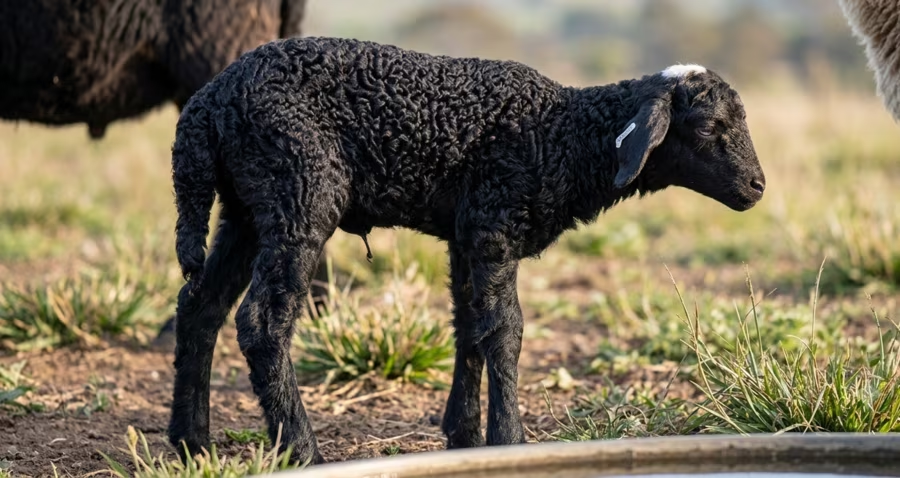
The karakul sheep is a hardy Central Asian breed. It has a large fat tail, tolerates heat and drought well, and can survive with limited pasture — qualities that suit the arid regions where it is raised.
The breed is found across Afghanistan, Uzbekistan, and Turkmenistan. In Afghanistan it is raised primarily for its skin, but also for meat and wool.
The most valuable product comes from newborns. The skin of a freshly born karakul lamb has a tight, glossy curl that is prized for hatmaking and for collars on formal coats. The quality of that curl — its density, sheen, and consistency — determines what the skin is worth.
Historically, karakul skin was one of Afghanistan’s significant export commodities. The trade has declined, but the sheep and the craft that depends on it remain part of the country’s material culture.
The hat beyond Afghanistan
The karakul did not stay in Central Asia. As trade routes moved pelts westward, the hat followed — and took on different names and meanings in different places.
Russia — the Astrakhan hat
In Russia and much of the Soviet world, the same style is known as the Astrakhan hat. The name comes not from the sheep but from the Russian city of Astrakhan, which sits at the mouth of the Volga River on the Caspian Sea. Central Asian traders sold karakul pelts there, and when European buyers carried them further, they labelled the product after the city where they had bought it. The origin of the sheep — Uzbekistan, Afghanistan — was lost along the way.
In the Soviet era the hat became associated with the political elite. Leonid Brezhnev and Mikhail Gorbachev both wore the taller, cylindrical Russian version, cementing its image as a hat of power and officialdom.
Pakistan — the Jinnah cap
In Pakistan the same hat is called the Jinnah cap, after Muhammad Ali Jinnah, the founder and first governor-general of Pakistan. Jinnah wore the karakul as a deliberate marker of Muslim identity and South Asian dignity during the independence movement, and the image stuck. Pakistani politicians and officials have worn it ever since as a signal of continuity with that founding moment.
The Jinnah cap is the same hat — a karakul — worn under a different name. What changed is the political memory attached to it.
Still worn where it counts
Behind every karakul is a whole chain: a hardy breed of sheep raised across Afghanistan and Central Asia, a craftsman who knows how to tan the skin and shape it by hand, and a tradition of wearing it that has held across generations and governments.
The hat has fallen out of daily fashion. But it has not left. Wherever Afghan identity and formality need to be expressed at the same time — a wedding, a council, a moment in front of cameras — the karakul still shows up.
Some objects outlast the times that made them famous. The karakul is one of them.
Do you have a comment or something to share? contact us: info@aboutafg.com