Long before cement became common in Afghanistan, families sealed their roofs against snow and rain with nothing more than clay, chopped straw, and water — a mixture still applied by hand today, in cities and villages alike.
What kah-gil is
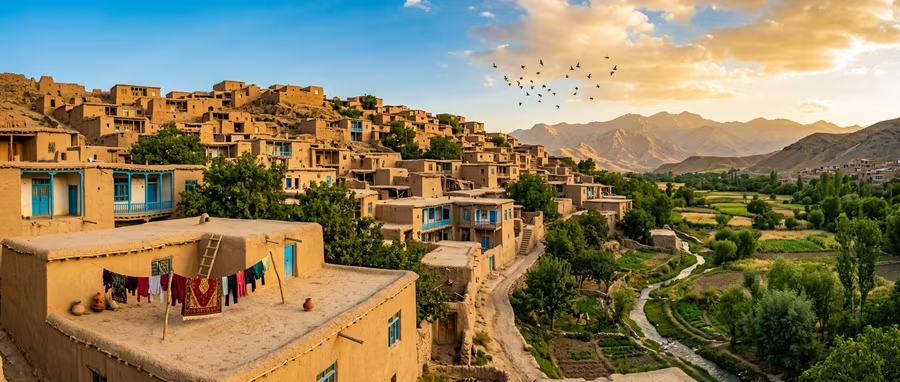
Kah-gil (کاه گل) — literally “straw-clay” in Dari — is a mixture of clay soil and chopped wheat or barley straw, applied as a finishing layer on roofs and walls to keep snow and rain from soaking through. It is not a modern improvisation. People have been mixing clay with straw for as long as they have grown wheat and barley, and in many parts of Afghanistan it is still used today in place of cement.
Kah-gil does not match cement for strength or lifespan. But it does the job it’s asked to do, and it does it with materials that are already at hand.
There’s a belief attached to it too: light earthquakes are thought to leave small cracks in a kah-gil wall or roof, and winter rain or snow reseals them as the clay swells back together — a kind of self-healing that a rigid material like cement doesn’t have.
Why clay and straw instead of cement
The reasons are practical rather than sentimental:
- Cement wasn’t available. In the past, cement simply wasn’t accessible in much of rural Afghanistan.
- Clay and straw are cheap and close by. Both materials are bought from a seller, usually within the same village or city, so there’s no long haul to get them to the house.
- It works on floors too. In many places, especially villages, kah-gil is also spread over room floors, because people believe it blocks moisture from rising up through the ground.
What goes into it
Three ingredients, all simple:
- Clay soil — sieved before use, to strain out pebbles and bits of wood.
- Straw — the chopped-up stalks of wheat or barley, left over once the grain itself has been threshed out.
- Water — any water will do, salty or fresh.
How kah-gil is mixed and cured
Making a usable batch of kah-gil is less a single step than a multi-day process of soaking and resting.
Clay and straw are combined roughly three parts clay to one part straw and turned over with a shovel. The mound is then left for two full days and nights. Partway through, workers hollow out a well in the center of the pile — known locally as the abkhor — and fill it with water. If the mixture has dried out after twenty-four hours, it’s watered again, then left another full day so both the clay and the straw are thoroughly soaked through.
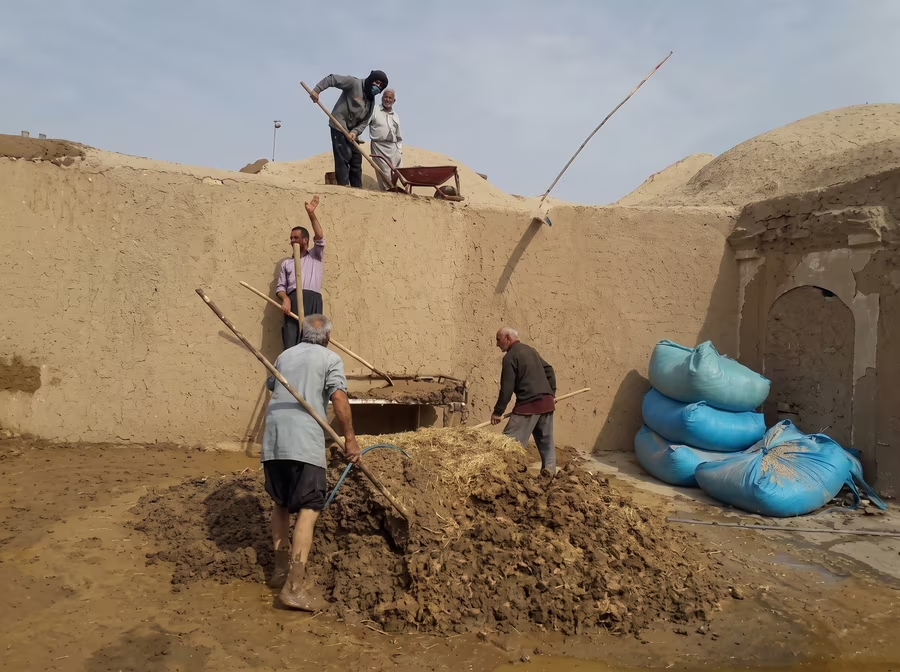
Once that soaking period is done, one or two workers turn the whole pile over again with a shovel, folding it back on itself until it’s an even, workable mud — ready to be carried up.
Getting it onto the roof
Before any kah-gil goes up, the khalifa — the craftsman leading the job — sweeps the rooftop clean and lays down a sheet of plastic, so that if snow or rain ever gets through the kah-gil layer, it doesn’t get through the plastic underneath as well. He also trims back the mouths of the roof’s drainage spouts, so they won’t get blocked and stop water draining off.
Getting the mud up to the roof takes two people working together. The wet mixture is packed into buckets made from repurposed vehicle tire rubber — locally called a dola or dolcha — and one worker on the ground hoists it up on a rope, ideally cotton, to the khalifa waiting above.
Spreading and smoothing
Once a load reaches the roof, the khalifa empties it out and spreads it, judging the roof’s slope, the thickness of the layer, and where water needs to run off. The tool for this is a flat hand trowel known as a gel-mala.
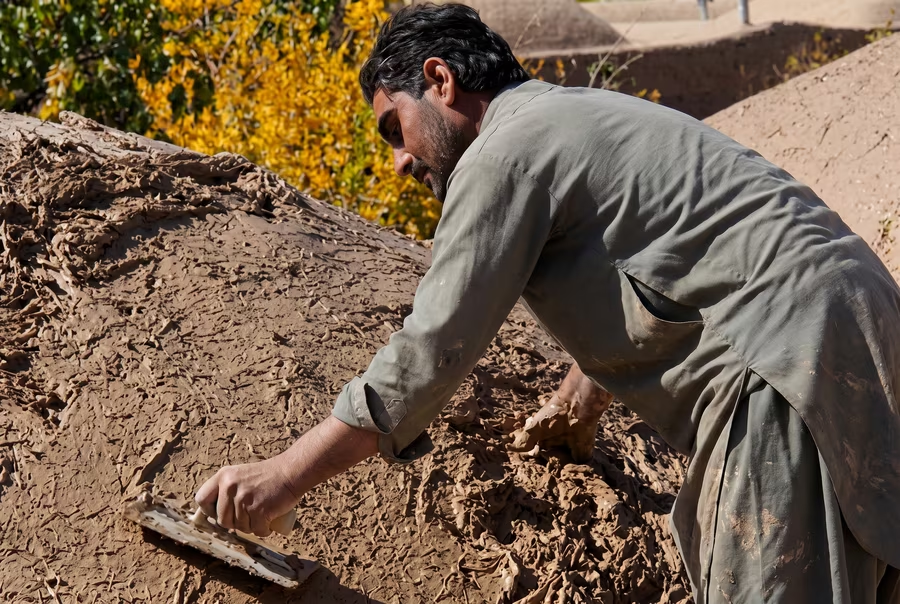
Once the rooftop is finished, the khalifa moves on to any outer walls or other surfaces that need sealing, applying kah-gil there as well before leaving it all to dry.
How long kah-gil lasts
Kah-gil wears down over time. Every rainfall, every snowfall, every round of shoveling snow off the roof carries a little more of it away, until eventually there’s not much cover left. Families who can manage it renew the whole roof about every two years. Others stretch that out much longer — sometimes because a run of drier weather has been kinder to the roof, sometimes because money is tighter — patching only the spots that need it rather than redoing the whole surface.
Snow is the biggest factor. It can’t be left on the roof to melt in place — once it does, the rooftop turns to pure mud, and that mud washes the kah-gil away far faster than ordinary rain would. Left unattended for long enough, it can weaken the roof to the point of collapse. So snow gets shoveled off quickly, before it gets the chance to melt.
Kah-gil today
Cement and modern roofing are now widely available across Afghanistan, and where families can afford them, they often do switch. But kah-gil hasn’t disappeared. It’s still the standard finish on countless rooftops, in cities and villages alike, and it remains a skill passed from khalifa to apprentice rather than learned from a manual — a piece of practical knowledge that has outlasted the shortage that first made it necessary.
Do you have a comment or something to share? contact us: info@aboutafg.com