Afghanistan has a long tradition of building for the climate. From the underground channels of the karez irrigation system to the wind-catching towers of Sistan, Afghans have always found practical ways to deal with extreme heat without modern machinery. One of the most inventive examples is the Helmandi cooler — a low-cost evaporative cooler that has been keeping homes cool across Afghanistan for generations, no grid power required.
What Is a Helmandi Cooler?
The Helmandi cooler is a traditional evaporative air cooler built from simple materials: a plastic barrel, hay straw cooling pads (pushal), a fan, and a water supply. It runs without grid electricity, which makes it practical across rural Afghanistan where reliable power is scarce.
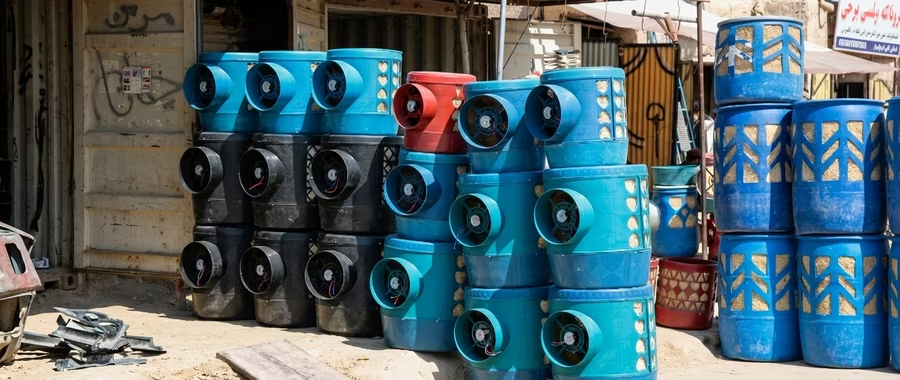
The design came out of Helmand province, one of the hottest and driest parts of the country, and has since spread well beyond the south — you can find them in Kabul and across much of Afghanistan. Today they are stacked high in bazaars everywhere, sold in teal, blue, and black barrels with fans mounted on the side.
How It Works
The Helmandi cooler runs on one principle: evaporative cooling. When water evaporates, it draws heat from the surrounding air and lowers the temperature.
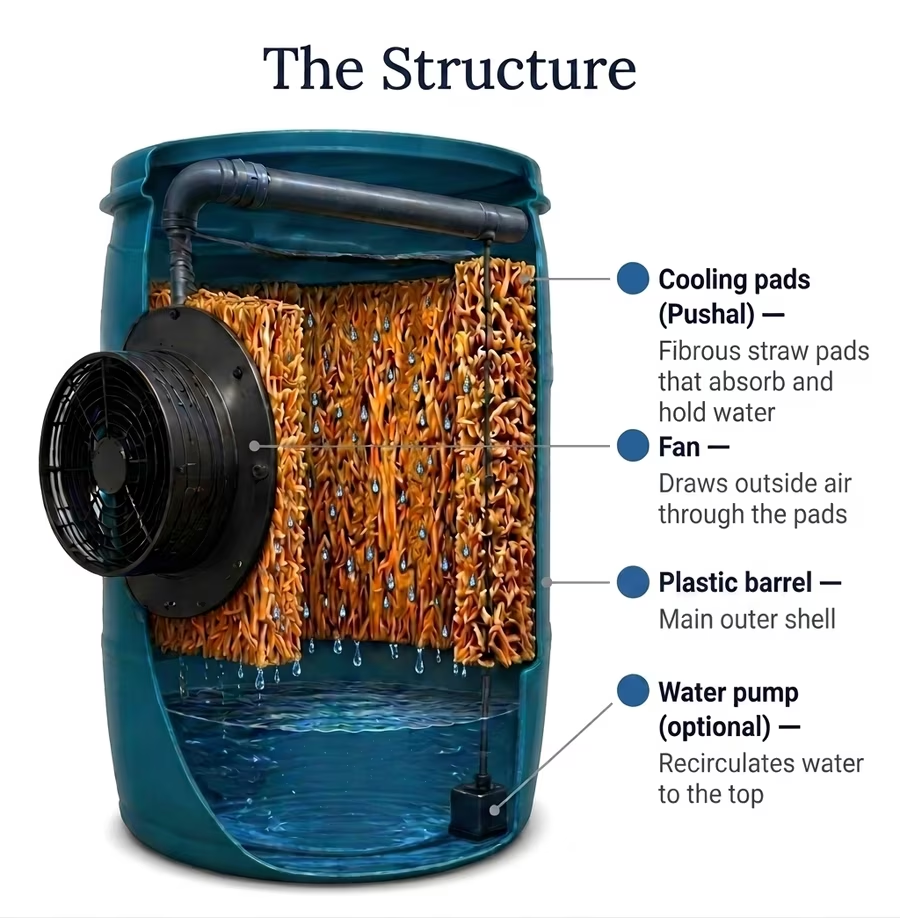
It is built from a plastic barrel, pushal pads (dried grass or hay straw — the kind livestock eat), a small 12V fan, a water pump, and a water supply. The diagram below shows how the parts fit together.
The process is straightforward:
- The fan draws in outside air through the side of the barrel.
- Air passes through the pushal pads, which line the inner walls and are kept wet by water dripping from a pipe at the top.
- Evaporation cools the air. As warm air moves through the wet pads, water evaporates and takes heat with it.
- Cool air enters the room. The cooler, more humid air flows out through the opening.
The water sits in a reservoir at the base and is fed back up by a small pump.
Some owners add extras: a fan speed controller, a protective mesh against insects and dust, or a drain valve. A solar panel is also a common addition for running it off the grid.
Why It Matters
Most rural households in southern Afghanistan don’t have stable grid power, so conventional air conditioners are not a realistic option. The Helmandi cooler fills that gap. Temperatures in Helmand regularly exceed 45°C (113°F) in July and August — the cooler makes that survivable at home.
It is also cheap to buy and easy to maintain. When the straw pads wear out, they are replaced. When the plastic cracks, a new barrel is found. There are no specialist parts, no gas refills, no technician needed.
And it produces no emissions. No fossil fuel, no refrigerant, a modest amount of water. For communities living with summer temperatures that most of the world never experiences, that is a practical win on every front.
Limitations
Evaporative cooling works best in hot, dry air. When humidity is already high, the air cannot absorb much more water vapor, so cooling slows down. In Afghanistan’s arid south this is rarely a problem — but in more humid areas the effect is weaker.
Other limitations:
- Straw pads need replacing periodically
- The barrel body can crack from heat and UV exposure over time
- It adds humidity to the room — welcome in dry heat, less so in humid conditions
- Cooling capacity is lower than a modern split AC unit
For the conditions it was built for, though, it does the job well.
When Nothing Else Is Available
In areas where even a basic fan is unavailable, similar physics can be applied with a single piece of cloth.
A heavy cotton sack — the kind used for grain, flour, or dried goods — is hung over the outer doorway of the house. The sack is soaked with water, and the door is left open. As the breeze outside pushes through, it passes through the wet fabric. The evaporating water draws heat from the moving air, and what reaches the inside of the room is noticeably cooler than what started on the other side.
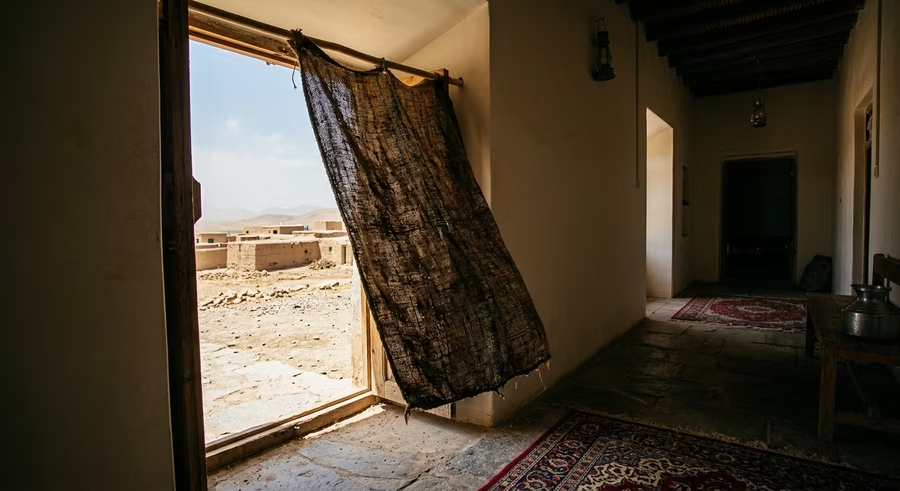
No electricity, no pump, no moving parts. A wet cloth in a doorway and natural airflow doing the rest — the same evaporative principle as the Helmandi cooler, stripped back to its simplest form.
A Toolkit, Not a Single Invention
Neither of these was designed in a lab. Both evolved over time through people solving a real problem with whatever was at hand. The Helmandi cooler is still in active production today, stacked in bazaars across Afghanistan — most heavily in the south. The wet cotton sack in the doorway costs nothing and has no parts to replace.
Two solutions, one principle, scaled to what is available. That is Afghan engineering at its most practical.
Do you have a comment or something to share? contact us: info@aboutafg.com