Afghan winters range from cold to severe. In Kabul the temperature regularly drops below freezing. In the northeast — Badakhshan and the high mountain valleys — it can reach −30°C or lower. For most Afghan households, the answer to winter is not a central heating system.
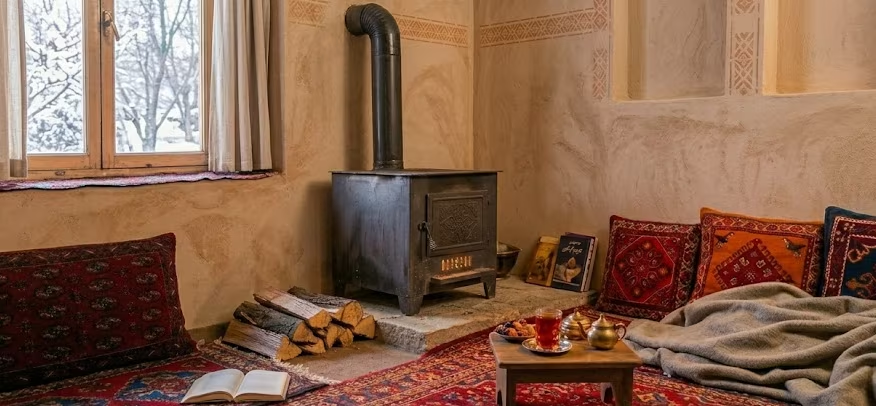
In wealthier households and some well-equipped buildings, central heating, electric stoves, and gas-powered heaters are also used. These are the exception rather than the rule — available where the infrastructure and budget allow, but not how most Afghans heat their homes.
The bukhari
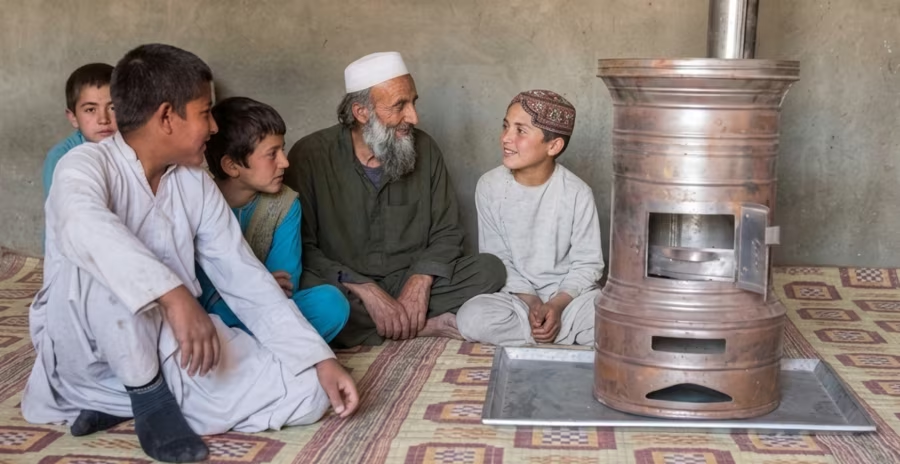
The bukhari is a coal-burning metal stove. It also burns cow dung and nut shells — almond and walnut — but coal (zoghal sang) is the primary fuel. Wood is not used in a bukhari; that is what the chari is for.
Two versions exist:
- Sheet steel (halab) — comes in cylinder shape. Built locally by Afghan metalworkers, from the same material as the samawat. Light, affordable, and the one found in most households.
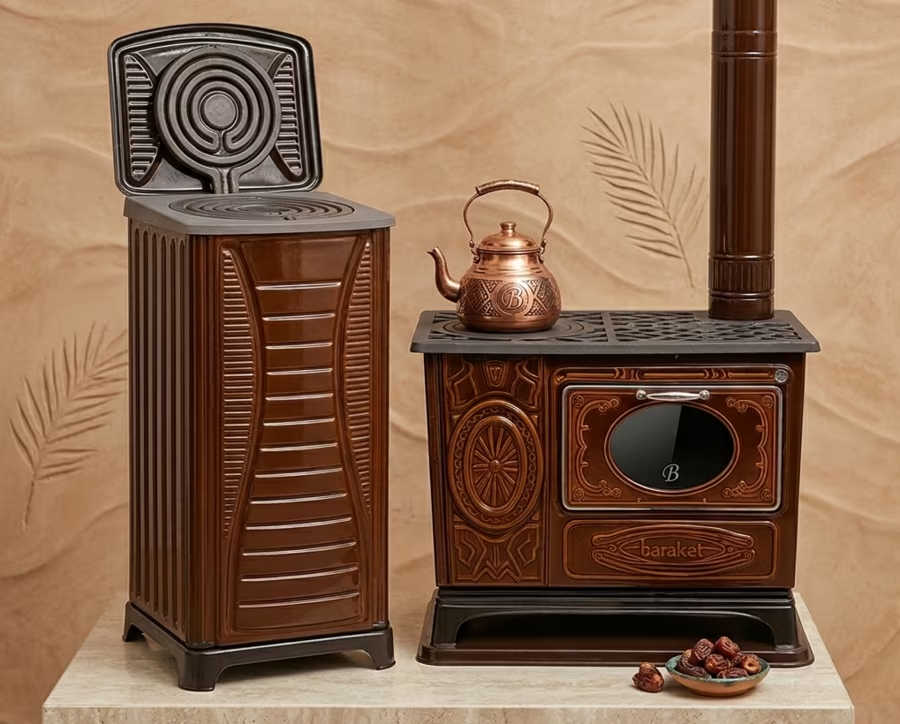
- Cast iron — comes in two shapes: a narrow, tall cylinder unique to the bukhari, and a rectangular box that looks identical to a cast iron chari from the outside. Imported, mostly from Turkey. Far heavier, 10 to 20 times more expensive, and built to last much longer.
Lighting a bukhari
A bukhari is lit using an iron bucket — roughly 30 cm in diameter and 50 cm tall. Palm-sized lumps of coal are placed carefully around the inside wall of the bucket, keeping the centre completely empty — just enough space for one hand to fit through. That hollow centre is then filled with thin juniper sticks and one or two finger-sized pieces of fatwood — the same woods used across the chari and the samawat.
The bucket is placed inside the bukhari and the fatwood is lit. The fatwood catches the juniper; the juniper catches the coal. Once the coal is burning, the bukhari needs no further attention until it burns out completely — which takes several hours. You only refuel or relight once the bukhari is completely cold. The ash left in the bucket is cleared out at that point.
In most Afghan households the bukhari is lit once, at night. A second lighting during the day is a matter of what the household can afford.
The chari
The chari is a wood-burning stove — the counterpart to the bukhari, but fed with wood rather than coal. It also burns cow dung and nut shells — almond and walnut. Unlike the bukhari, the chari can be fed continuously. Oak logs are added through the front opening as needed. The ash drops into a lower compartment that can be cleared out while the fire is still burning.
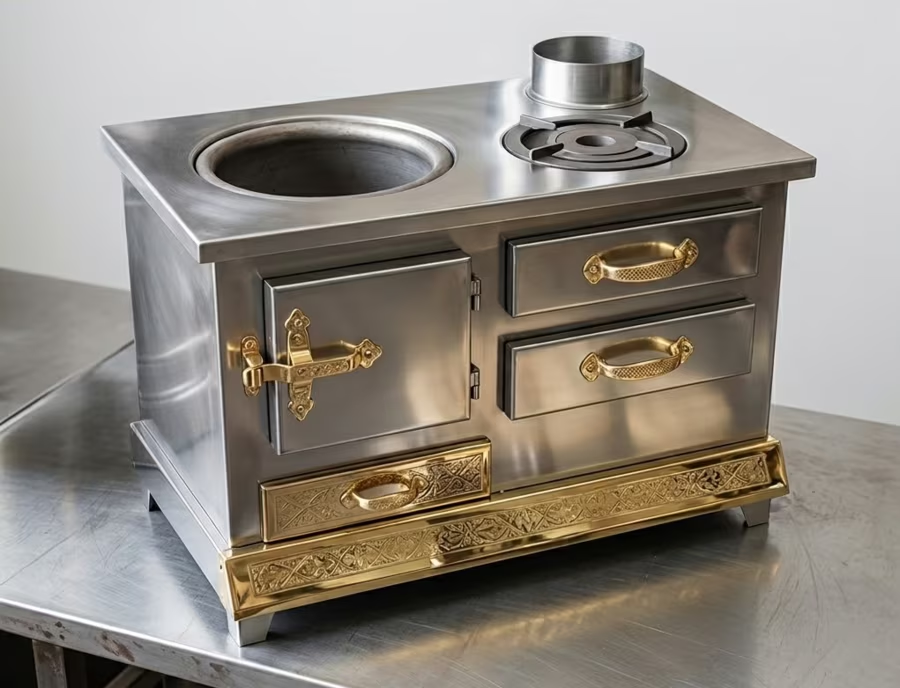
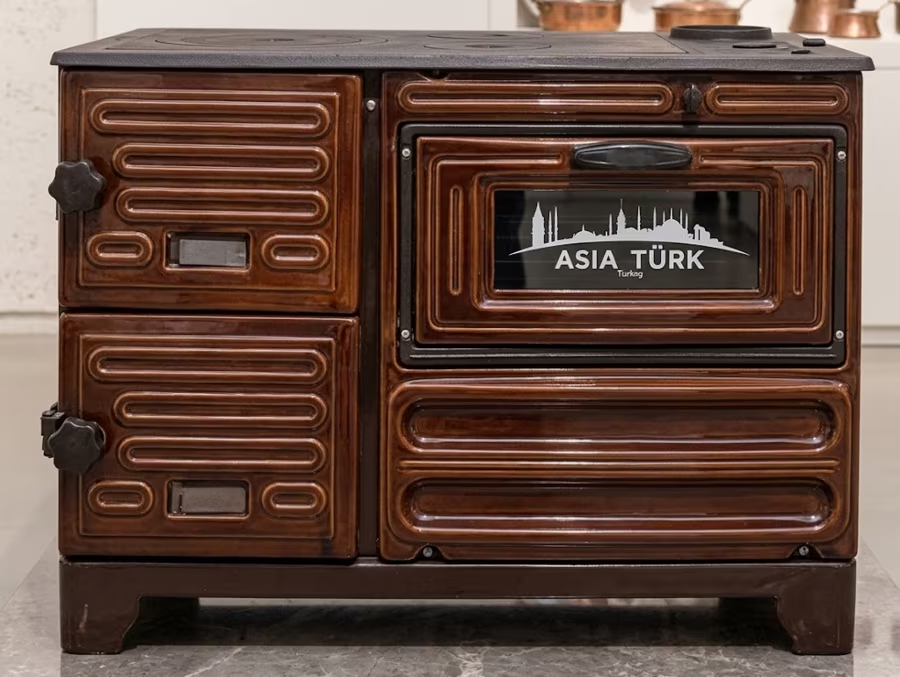
Getting the fire going takes three types of wood in a set sequence — detailed below.
Cleaning the bukhari and chari
Both need cleaning about once a week. If the chimney builds up too much residue, the airflow gets restricted and the fire won’t burn properly.
It is a cumbersome job. The chimney pipes are detached and cleaned out thoroughly, and the sections that run through the wall are also cleared. This inevitably brings hardened soot and residue into the room. Most people lay plastic sheeting across the floor and around the stove before starting to catch the mess.
Whether you can clean the bukhari and chari outside or not depends on the type. Sheet steel versions are light enough to carry out, so the bulk of the cleaning can happen in the open air. Cast iron stoves are too heavy to move, so the whole operation happens inside the house.
The three woods
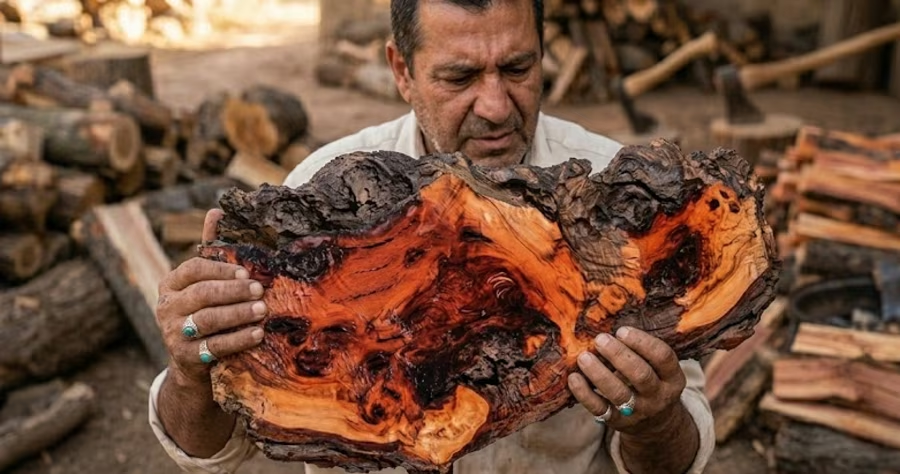
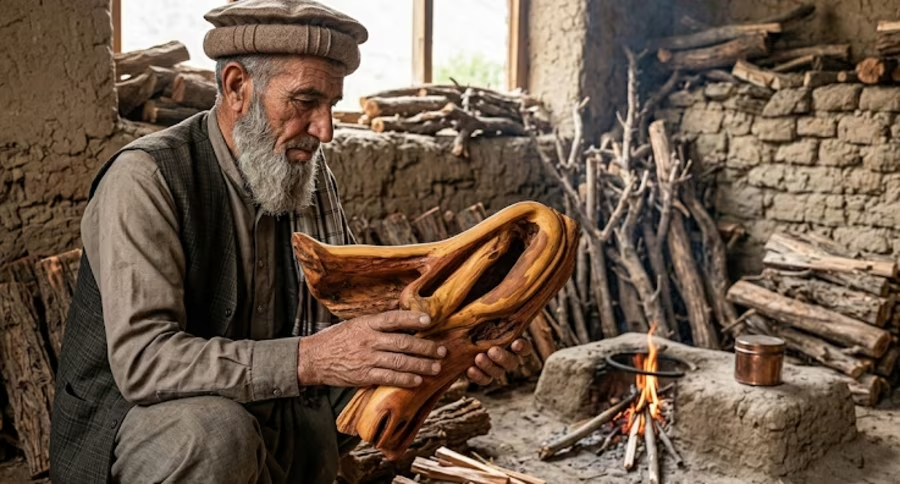
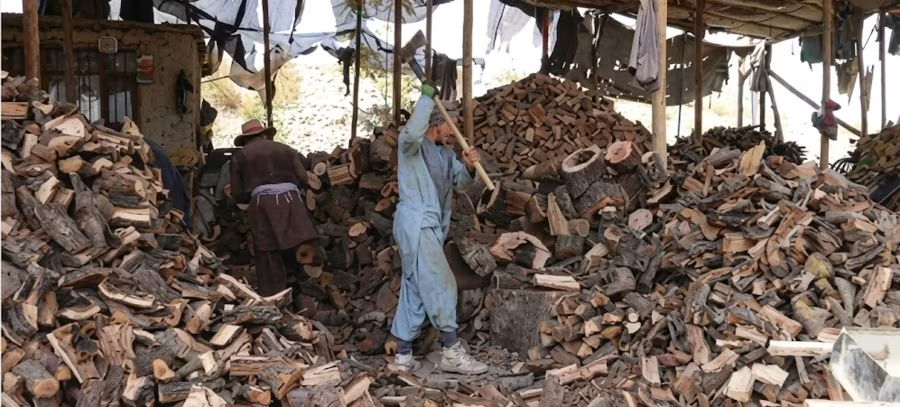
The chari, the bukhari, and the samawat all rely on the same three types of wood. They are used in a fixed sequence — each has a specific role, and skipping any of them makes the fire harder to start or sustain.
- Roghani (fatwood) — resin-saturated pine heartwood. Used in a very small amount at the very start; just enough to catch the juniper. Any more and it produces heavy, oily smoke.
- Archa (juniper) — lit by the fatwood, it burns cleanly with almost no smoke. It burns fast, which makes it expensive to use as the main fuel, so it is only used to get the fire going.
- Balut (oak) — harder to light, but once going it burns heavy, long, and steady. This is what carries the fire for the rest of the day.
Almond and walnut shells
Merchants distribute sacks of unshelled almonds or walnuts — each sack around a hundred kilograms. Households who want the shells pay the merchant upfront when the sack is delivered, around sixty to seventy Afghanis per sack.
If the nuts are wet, they are spread out to dry first. Then the shells are broken open, and the nuts are dried again. At the end, the household returns the intact nuts along with any accidentally broken ones to the merchant — and keeps only the shells.
The work comes with a fixed deadline. The merchant sets a return date, and the household must have the shelled nuts back by then. The deadline is the same whether a family secured one sack or several — one sack or more, the date does not change.
Despite paying for the work and taking home nothing but shells, demand is high — not everyone who wants a sack gets one.
The sandali
The sandali is a different approach entirely. A low wooden table is placed over a manghal — a metal bowl or brazier filled with charcoal — and heavy quilts and blankets (lahaf) are layered over the table and spread out around it. The family sits or lies around the sandali with legs beneath the blankets, surrounded by warmth from below.
Charcoal (zoghal) is the fuel. The coals are placed in the brazier while still burning hot, sometimes covered with ash to slow the burn and extend the heat. The goal is a slow, steady glow rather than a bright flame.
The sandali is a slow heat and a social one. Around the sandali, families gather for meals and tea, children sit and do their homework, and in smaller homes people sleep through the night. Electric versions of the brazier exist, but unreliable electricity limits how widely they are used.
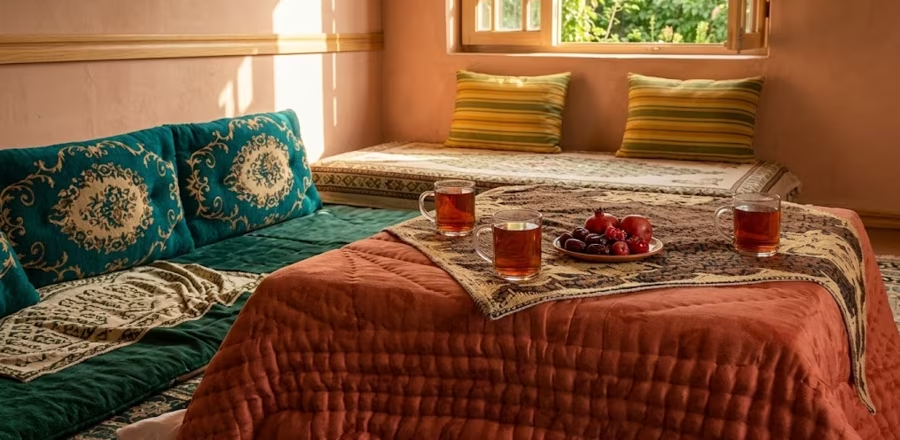
The sandali, the korsi, and the kotatsu
The same concept exists under different names across the region. In Iran it is called the korsi — the same low table, the same blankets, the same idea. Historically it carried much the same social meaning. It largely fell out of use as Iran built a nationwide natural gas pipeline network; most Iranian homes now heat with gas stoves.
The Japanese kotatsu looks almost identical — a low table, a heat source underneath, blankets draped over and tucked around it. People who see both side by side often assume one came from the other, but the two developed completely independently. The sandali grew out of Central Asian tradition. The kotatsu developed from the irori, a sunken hearth that Japanese households had used for centuries — someone eventually placed a frame over it and draped cloth across it to trap the warmth. Two different parts of the world, arriving at the same answer to the same problem.
Fuels
Wood has historically been the main fuel across most of the country. The main types used for heating are covered above.
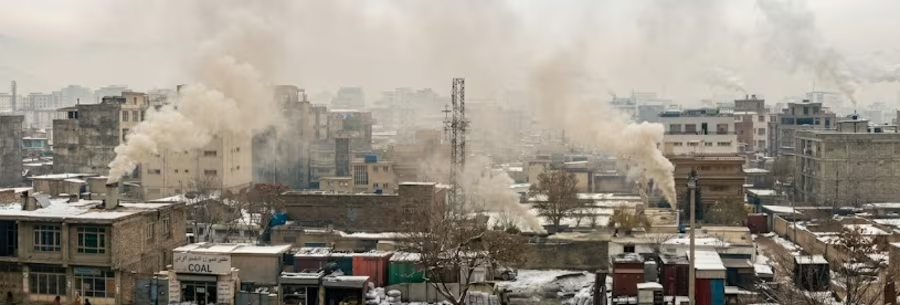
Coal is widely used, particularly in cities. Afghanistan has substantial coal deposits, mainly in the northern provinces of Baghlan and Samangan. This coal is mined and sold domestically — in Kabul alone, hundreds of thousands of tonnes are burned each winter for heating. It is heavier and longer-burning than wood, which makes it practical for a bukhari.
Coal use in Kabul is increasing every winter. The city sits in a valley, and in cold months the smoke has nowhere to go — a thick, heavy smog settles over the city for weeks at a time. The air quality drops severely and the health effects, particularly on the lungs, are serious.
Charcoal is the fuel of the sandali. It is also used in the tandoor oven for cooking. Charcoal burns more cleanly than raw wood and produces less visible smoke, but it produces carbon monoxide and must be used in ventilated spaces.
Almond and walnut shells are burned in both the bukhari and the chari. How people obtain them involves an arrangement worth knowing about.
Cow dung — dried and pressed — is burned by households that keep cows. It is not a workaround; for a family with cattle, it is simply something they have on hand rather than wood or coal to buy.
Electricity — electric heaters are used where the grid is reliable enough to depend on. They are most common in company offices, government buildings, and international NGO offices.
Gas — gas-powered heaters run on LPG, supplied in 10 kg cylinders. Used in urban areas by households with the means to refill them regularly.
Central heating — some well-equipped buildings in cities run central heating through radiators. In residential buildings it is typically coal-fired; in offices and organisations, diesel-powered boilers are more common.
Warm homes, cold winters
Afghan winters are cold — genuinely cold. But sitting inside a warm Afghan home in the middle of winter, with the fire going and tea in hand, the cold stays where it belongs — outside.
Do you have a comment or something to share? contact us: info@aboutafg.com