Two mountains in Afghanistan carry the name Chil Dokhtaran — “Forty Maidens” — and each holds its own story. The one in Uruzgan province is tied to a specific place, a specific era, and a name still spoken in Hazarajat: Shirin.
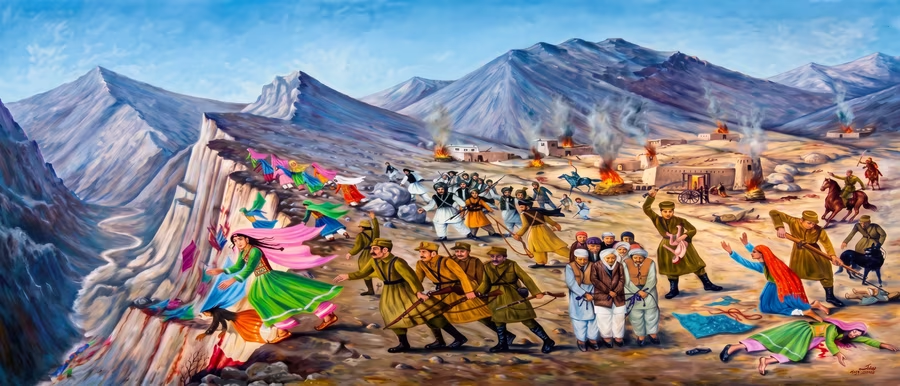
The Mountain in Shashpar
The mountain stands in Shashpar, part of Khas Uruzgan district, high in the Hazarajat. A second mountain by the same name, unrelated to this story, sits in the Dasht-e-Barchi area of west Kabul. The account that follows belongs to the Uruzgan one.
The Hazara Genocide
The legend is rooted in a real period of Afghan history. In the late 19th century, Amir Abdur Rahman Khan led military campaigns into Hazarajat as part of a wider effort to bring the region under central control.
The campaigns in Uruzgan and neighboring areas were harsh: men were killed, and women and children were taken captive. Historical accounts describe captives being sold into slavery, with the proceeds reportedly used to help fund the army’s yearly expenses.
Afterward, Hazara land in the affected areas was reassigned to loyalist Pashtun settlers and Kuchi nomads. This period is recorded in historical scholarship, and documented on Wikipedia as the Hazara genocide, as one of the most violent chapters in the region’s history.
Shirin and the Forty Girls
Local oral tradition in Shashpar names a girl called Shirin at the center of the story. According to the account passed down in the area, Shirin had been learning archery from a man named Ali Mardan — and only later learned that Ali Mardan was her father.
When the Amir’s forces advanced into Uruzgan, killing and capturing people across the district, Shirin and a group of other girls decided they would not be taken. They fled toward a mountain in the Shashpar area. When they reached the summit, there was nowhere left to go. They held off the approaching soldiers for a time by throwing stones down the slope. When it became clear there was no way out, the girls chose to jump rather than be captured.
Local tradition adds a coda: the commander said to have led that assault was reportedly haunted for the rest of his life, tormented by what he had done, and years later he and his family were killed under the Amir’s own government.
What the Mountain Was Called For
According to local memory, the community buried Shirin and the girls who died with her at the foot of the mountain, at night. For a time afterward, families in the area named their newborn daughters Shirin, and held engagement and wedding ceremonies for their children on the mountain itself, in honor of the story. Over time, that tradition faded. Today, the naming and the ceremonies are no longer practiced.
Today
Koh-e Chil Dokhtaran remains a named landmark in Uruzgan, and the story is still told locally — one of several accounts from the Hazara genocide that has survived mainly through oral memory rather than written record. There is no monument or plaque at the site; the mountain itself, and its name, are what carry the memory of the girls who died there rather than be taken. What is known rests with the families who still pass the story down.
If you know more about Koh-e Chil Dokhtaran, its Kabul counterpart, or other stories from this period, we would like to hear them — reach out to us.
Do you have a comment or something to share? contact us: info@aboutafg.com