Every time a chicken is cooked, one bone is worth keeping. The chenaq — the small, forked wishbone at the top of the bird’s chest — gets pulled out, set aside, and used to start a game that can last for days — or even years. Some people take it to extremes.
What Is Chenaq?
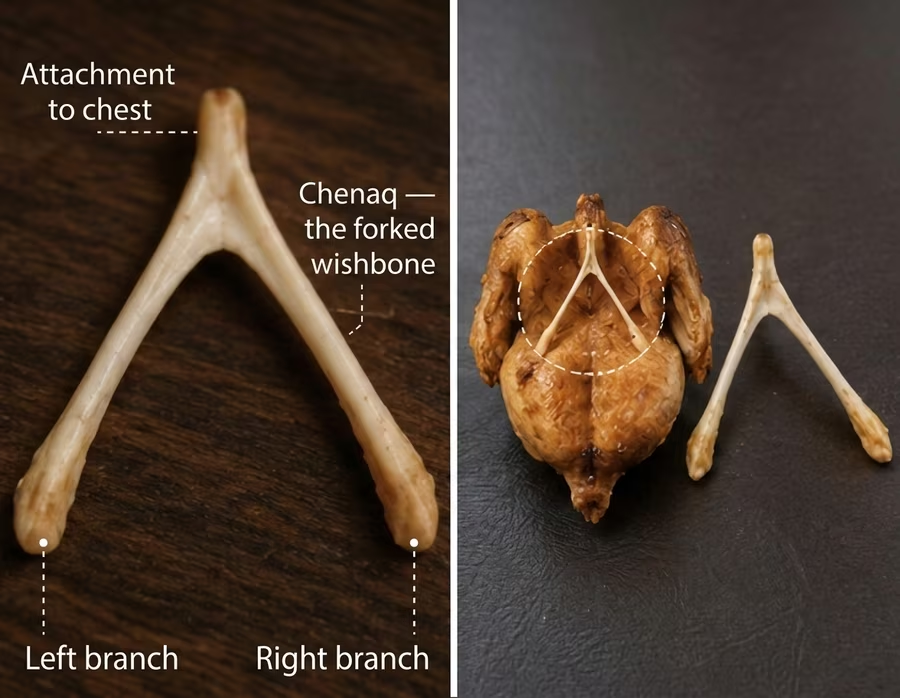
Chenaq (چناق) is the Dari word for the wishbone — the forked bone at the upper chest of a chicken. After the bird is slaughtered or cooked, the bone is removed, cleaned, and set aside. You only need two players to begin.
How It’s Played
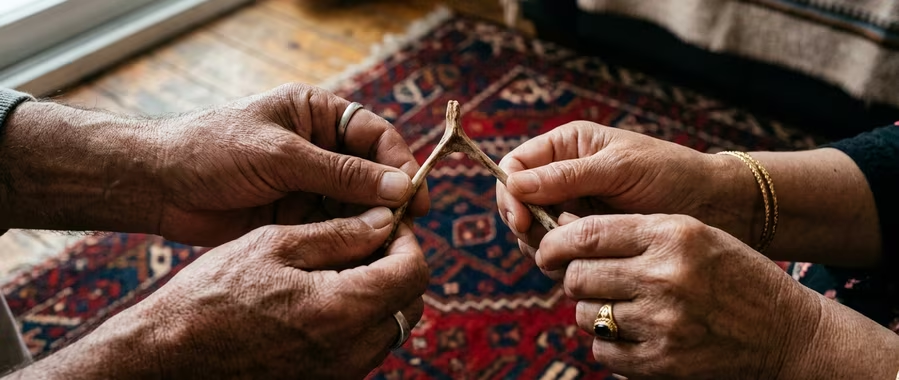
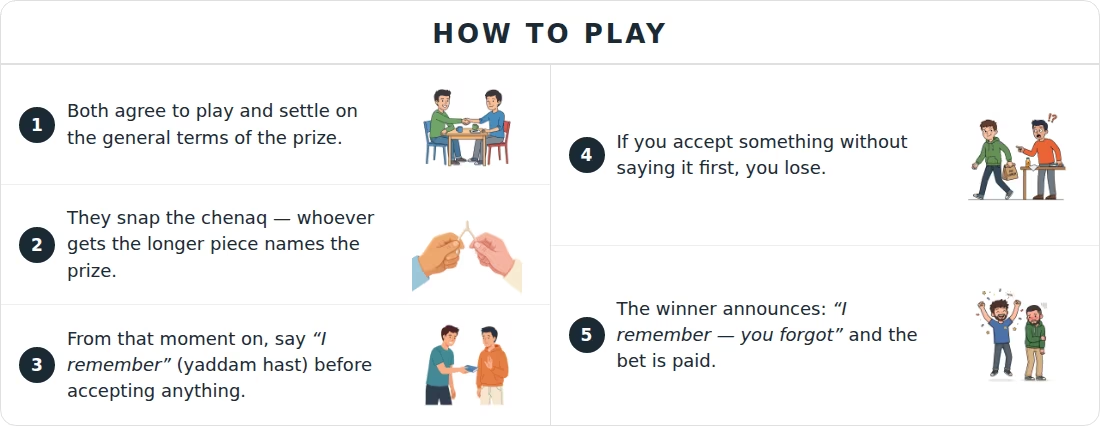
Before breaking the bone, both players agree to enter the game and settle on the general terms — what kind of prize is in play and how far it could go. Then each takes one branch and snaps the chenaq. Whoever ends up with the longer piece names the prize: buying sweets, treating the other to a meal, or whatever they decide fits.
From that moment on, the real game runs quietly in the background of normal life. Whenever you want to receive something from your opponent — anything they hand you, anything you take from them — you must say yaddam hast (“I remember”) before you accept it.
You win by catching your opponent in the act — the moment they accept something from you without saying yaddam hast first. If you forget and take something without saying it, you lose. The winner announces it plainly: mara yad wa to ra faramosh — “I remember, and you have forgotten” — and the bet is paid.
Why It Works
There is no board, no equipment, no timer. The bone itself is discarded the moment it breaks. What remains is a rule you carry in your head while going about your day.
Meals happen. Things are passed back and forth. Conversations drift. And somewhere in all of that, one player forgets. The longer both players stay sharp, the longer the game runs. Some games last an afternoon. Others go on for weeks, months or years.
More Than a Game
Chenaq is played by children, teenagers, and adults — it does not belong to any one age group. The stakes are kept low by design. The pleasure is in the tension, the laughter, and the surprise of being caught off guard at exactly the wrong moment.
Any family that cooks chicken has everything needed. No referee, no setup, no cleanup. Just two people, a bone, and a shared understanding of the rules.
Regional variations likely exist — the exact phrasing and how the bet is set may differ from one part of Afghanistan to another. If you know a version of the game from your area, we would be glad to hear about it.
Do you have a comment or something to share? contact us: info@aboutafg.com