The buria predates the carpet. Before wool was knotted and dyed, Afghan families were weaving reed mats from plants that grew wild along rivers like the Helmand and the Amu. Simple, durable, and free to make — it is one of the oldest crafts still practiced in Afghanistan.
What it is
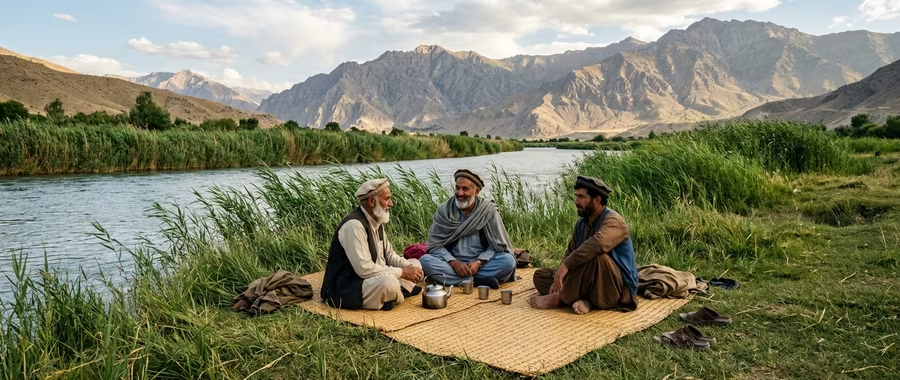
A buria (بوریا) is woven from the stalks of reeds and rivergrass. It has no pile, no dye, and no complex pattern. What it has is utility: a clean, firm surface that can be rolled up, carried, and spread anywhere.
Before manufactured flooring existed, buria was one of the standard floor coverings in Afghan homes, mosques, and public spaces. In many rural areas it still is.
Where it is made
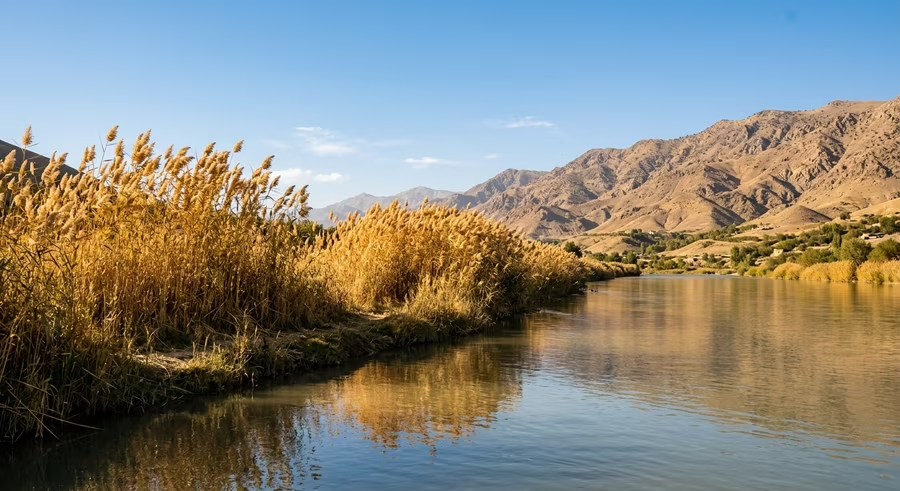
Buria weaving is concentrated in provinces where the raw plants grow in abundance along rivers and wetlands: Helmand (along the Helmand River), Nangarhar, Khost, Farah, and parts of the north near the Amu river and Hari Rud rivers.
The craft is passed down within families. Most weavers are women.
The materials
Three plants are used most often.
Nay (نی — common reed) is the primary material — a tall, slim reed that grows along riverbanks. Light, flexible, and firm enough to hold its shape underfoot.
Lakh (لخ — bulrush / cattail) is slightly softer. Used on its own or mixed with nay depending on what is available. More common in wetland areas of the north and west.
Jagan (جگن — sedge) has a stiff but workable stalk. Found near the Amu river, Helmand, and Hari Rud.
The reeds are bound together using natural plant fibers, or sometimes cotton or wool thread. After harvesting, they are spread in the sun until the moisture is gone.
How it is made
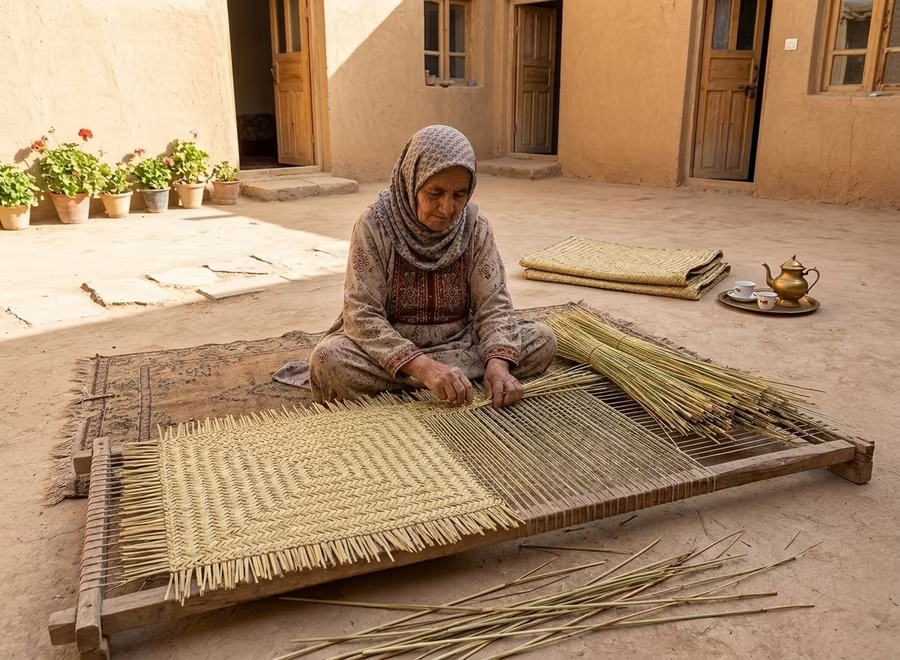
The process relies on skill and experience more than tools:
- Reeds are gathered from wetland areas, usually in summer when the plants are fully grown.
- They are dried in the sun.
- Sorted by size and thickness.
- Laid side by side and bound with thread in a repeating pattern.
- The edges are trimmed and dampened briefly to soften them.
What it is used for
- Floor covering in homes and mosques
- Seating in guest rooms
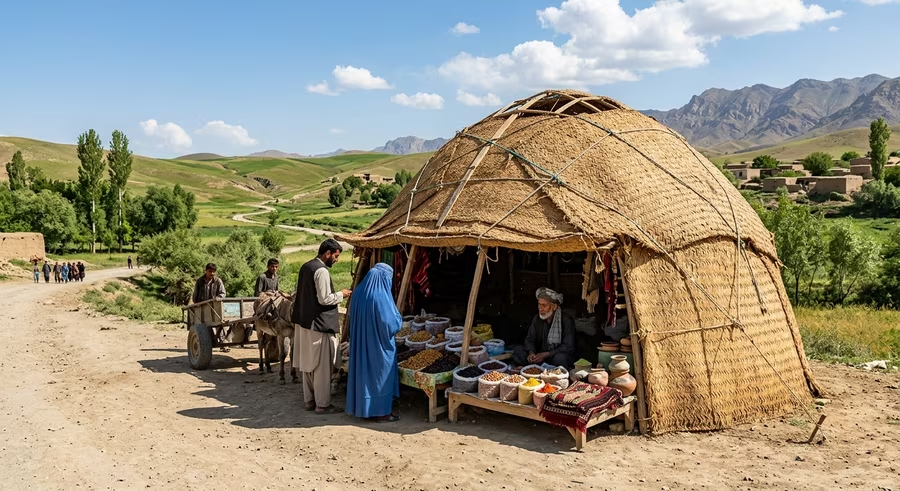
- Wall and roof lining in temporary shelters and roadside stalls
- Drying surface for grain and other crops
- Outdoor gatherings and local ceremonies
Why it mattered economically
Buria weaving’s main advantage is a low barrier to entry. The raw materials grow wild along riverbanks and no workshop is needed. What it does require is skill and time — the kind built over years and passed down within families.
This made it one of the few productive crafts available to rural families, particularly women, with limited resources. Selling buria at a local market or through traders who carry goods between provinces provides a real supplementary income.
Its place in Afghan culture
Buria is not fine art. It does not carry the prestige of a hand-knotted carpet. But it belongs to the same tradition of making useful things from what the land provides.
The patterns are simple — mostly plain weave or basic geometric arrangements. They vary by region and by maker, and each reflects the materials and methods of a specific place.
Over time, as the demand for more durable and decorative floor coverings grew, this tradition of weaving with natural fibers evolved into something more sophisticated: the hand-knotted carpet. That evolution is worth following separately — and it is the subject of the next post.
Today
Buria weaving is less common than it once was. Industrial floor coverings have replaced it in many homes. Younger generations in most provinces are not learning the craft.
But it has not disappeared. In Helmand, Khost, and parts of the north, families still produce and sell it. The craft can be started with nothing but skill and access to the right riverbank.
Do you have a comment or something to share? contact us: info@aboutafg.com