Flying in Afghanistan is practical once you know how the system works. This guide gives you the four core airports, what each one is used for, and the local booking realities that matter most before you travel.
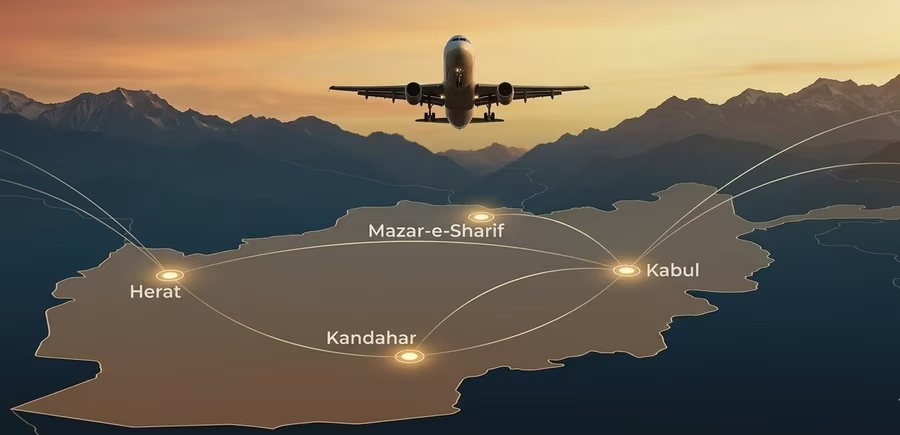
Afghanistan’s airports
Kabul International Airport (KBL) — International & Domestic. The main air hub for international civilian traffic and one of the most important gateways in the country.
Ahmad Shah Baba International Airport (KDH) — Primarily Domestic. A major airport in southern Afghanistan, serving both local and broader route needs.
Khwaja Abdullah Ansari International Airport (HEA) — Primarily Domestic. A key western airport for Herat and nearby areas.
Mawlana Jalaluddin Mohammad Balkhi International Airport (MZR) — Primarily Domestic. A major airport in northern Afghanistan, important for connections in and out of the north.
How to buy a ticket
Tickets are almost always bought in person at travel agencies or directly at airline offices. Online booking is a hard choice in Afghanistan for several reasons:
Payment infrastructure problems:
- International payment methods like Mastercard and Visa are not widely available
- The banks that do provide them come with a major caveat: payments are strictly one-way
- Refunds do not work—if your flight is cancelled and the airline refunds you, that money never reaches you back to your card
- This financial risk makes in-person booking the practical standard
Online pricing is often worse:
- Booking online tends to be more expensive than buying in person at a travel agency
- You lose the opportunity to bargain and negotiate better rates
How travel agencies work:
- Travel agencies typically try to sell you the least pleasant dates at the highest prices—this is standard practice
- Don’t accept their first offer; bargaining on both price and date is expected and normal
- Domestic flight prices do not change over time: Unlike flights in most countries, booking a domestic flight the same day or one month in advance costs the same price. There’s no incentive to book early, so negotiation is your main tool for getting a better rate.
- Even if two agencies quote the same USD price, their exchange rate from AFN may differ, so it’s worth comparing if you’re paying in AFN
What you need to bring
- For international flights: A valid passport (or a copy) is required to purchase a ticket. To board, you’ll need both your passport and a valid visa.
- For domestic flights: No ID card or formal identification is required to buy a ticket or board.
- To enter the airport: You must have a printed ticket. Have this ready before arrival.
Arriving at the airport
Plan to arrive at the airport 3 hours before your flight. This gives you time to check in, clear security, and navigate the terminal without rushing.
What to expect
Domestic flight delays of around one hour are fairly common—this is normal and not unusual. Domestic flights are rarely cancelled outright. International flights tend to be more predictable.
Checking your flight status:
- For international flights with international airlines, you can check the status on the airline’s website before heading to the airport
- For domestic flights, there’s no advance way to check. If a flight is cancelled, you’ll find out when you arrive at the airport—so plan accordingly and give yourself time
Final note
Flying in Afghanistan is straightforward if you’re prepared. The key differences from other countries are simple: buy from a travel agency (not online), bargain hard, give yourself time at the airport, and don’t expect advance predictability for domestic flights. Once you understand these practicalities, air travel works smoothly.
Do you have a comment or something to share? contact us: info@aboutafg.com