Afghanistan sits at the meeting point of South and Central Asia, where mountain landscapes, historic trade routes, and diverse communities shape everyday life. This introduction gives you a clear starting point before diving deeper into specific topics.
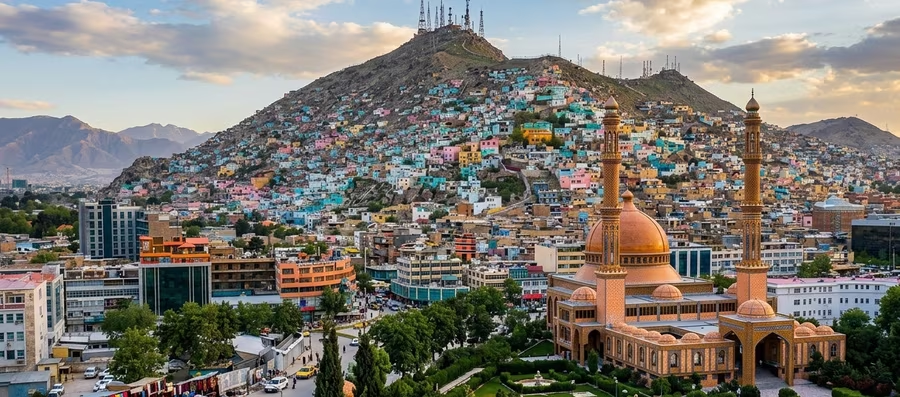
This page is a starting point for readers who want a simple, reliable overview before exploring specific topics in more detail. We continuously update this page with original research and verified details.
Where Afghanistan is
Afghanistan sits at a strategic crossroads connecting South Asia, Central Asia, and the Middle East.
It borders six countries:
- Pakistan
- Iran
- Turkmenistan
- Uzbekistan
- Tajikistan
- China
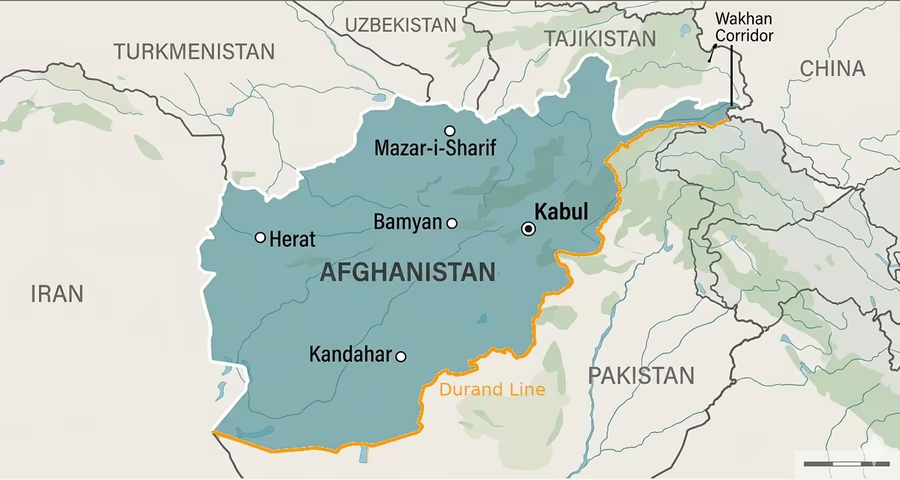
Durand Line is a 2,640-kilometer international border established in 1893 between Afghanistan and British India (now Pakistan). It spans from Iran to China, dividing the Pashtun and Baloch ethnic regions, and is recognized internationally as the border, though historically contested by Afghanistan. (wikipedia)
However, the current government of Afghanistan (Islamic Emirate of Afghanistan) does not seem to honor this border; in the news and formal reports published by them, it is usually referred to as the fictional Durand Line instead of the Afghanistan- Pakistan border.
Population and people
Afghanistan’s population is around 43 million people (as per UNFPA 2005 report), with a young demographic and strong family-centered social life.
Unfortunately, the surveys regarding the population and demographics of Afghanistan are not accurate, as:
- Fake data provided by people: People used to think of surveys as registration of humanitarian aid, so they believed if they reported their family members count higher, they would receive larger aid packages.
- Corruption in survey process: The surveyors, usually NGOs, did not conduct surveys completely and with honesty. They performed site operations and movements enough to take photos, videos, and make TV reports, then fabricated the rest of the data.
The country is home to many communities, including Pashtun, Tajik, Hazara, Uzbek, Turkmen, Baloch, and others. Dari and Pashto are official languages, and many people also speak regional and local languages.
Culture and daily life
Afghan culture is diverse across provinces, but shared values are common: hospitality, respect for elders, close family ties, and community support.
Food, poetry, religious and seasonal events, local markets, and neighborhood life are important parts of everyday experience across the country.
Climate at a glance
Afghanistan is generally dry, with strong seasonal contrast: hot summers in many lowland areas and cold winters in highland regions.
Climate conditions vary sharply by geography:
- Highlands can have severe winter cold and snowfall.
- Southwestern and some northern lowlands can become very hot in summer.
- Most annual precipitation falls between winter and early spring.
Basic climate context from Britannica and Wikipedia.
Economy and links to the world
Afghanistan has long been connected to regional trade. Agriculture, dry fruits, saffron, carpets, and small businesses are major parts of economic life.
Many Afghan families also have relatives in the diaspora, creating strong cross-border ties through education, work, remittances, and culture.
Currency in Afghanistan
Afghanistan’s currency is the Afghani, usually written as AFN. Its local symbol is ؋.
The exchange rate changes over time, but in recent years it has often moved around a broad range of roughly 65 to 80 AFN for 1 USD.
Common denominations include:
- Banknotes: 10, 20, 50, 100, 500, and 1000 AFN
- Smaller denominations: 1, 2, and 5 AFN (seen as coins or older notes depending on place and availability)
Do you have a comment or something to share? contact us: info@aboutafg.com