Rats under the beds in a maternity ward. Prescriptions written so only one pharmacy can read them. Two sick children sharing a single bed. This is what patients and their families describe happening inside Afghanistan’s hospitals.
Admission, Discharge, and Death
Families describe a real difference in how death is handled between government and private hospitals. At a government hospital, a death is treated as something that happened and is accepted. At a private hospital, a death brings paperwork and questions about why the patient could not be saved.
Families say that fear of what follows a death is exactly why private hospitals, as a rule, will not admit a patient who already arrives in bad condition. And if a patient already admitted takes a turn for the worse, the hospital discharges them rather than let them die there — sending them home, or on to a government hospital.
Medicine and Prescriptions
Across almost every hospital, several practices around prescriptions and medicine come up again and again:
- Prescriptions are written in a way that only the hospital’s own pharmacy — or one it directs the patient to — can read, for quantities that go beyond what the patient actually needs. This is a way for the pharmacy to sell more medicine, leaving patients little choice but to buy it.
- A swap scheme: family members are told to watch and confirm nursing staff use the specific medicine they brought in. If they don’t watch closely, it is sometimes swapped for something else or not used at all.
- Medicine handed to a nurse for safekeeping sometimes never reaches the patient at all — it goes missing somewhere between the family and the bed. When that happens, other patients and even doctors have been known to blame the family for not bringing what was needed, rather than ask where it actually went.
- At government hospitals in particular, admitting a patient often comes with a list of items the family is told to buy themselves from outside — including basic supplies like gloves, bandages, and masks that don’t even need a prescription. More is asked for than is actually used, and the excess turns up for resale on the street right outside the hospital.
- Prescriptions are now issued electronically at some hospitals, which means patients no longer see the prescription themselves and must go to a specific inter-hospital pharmacy to collect medication.
There is also no centralized database of pharmaceutical stock, for patients or for doctors. Finding a specific medicine means taking the prescription and going from pharmacy to pharmacy, hoping one of them happens to have it.
Antibiotic Overuse
Ceftriaxone is one of the most commonly used medicines in Afghanistan — both hospitals and general practitioners prescribe it regularly. It’s given in pairs, with a course starting at four injections and going up from there, administered twice a day: one in the morning, one in the afternoon.
Hospitals prescribe it for patients with infections and diseases, and separately, for anyone who has had surgery — given afterward to keep the surgical wound from getting infected, not as treatment for an infection that’s already there.
Among general practitioners, one diagnosis comes up constantly for a whole range of generic complaints — body aches, headaches, feeling faint, a heavy cough: that the patient’s blood is “dirty” or has “microbes.” The prescription that follows is almost always the same: ceftriaxone. It’s also common, on a return visit for the same complaint, to simply be prescribed more of it.
Standard medical guidance treats antibiotics as a last resort, to be used as little as possible.
Shared Beds
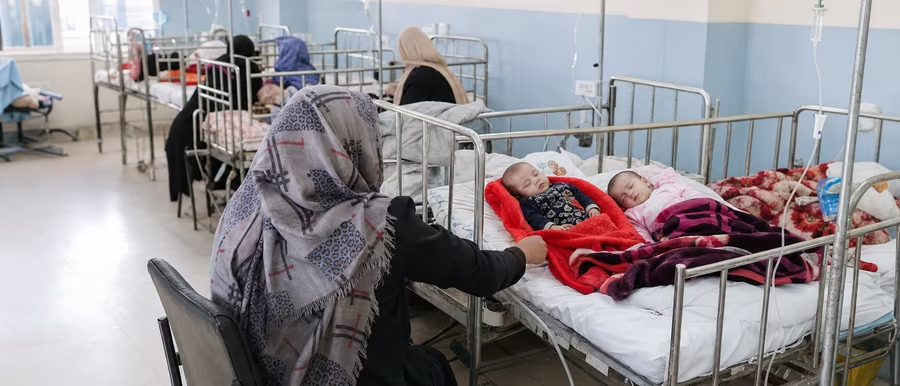
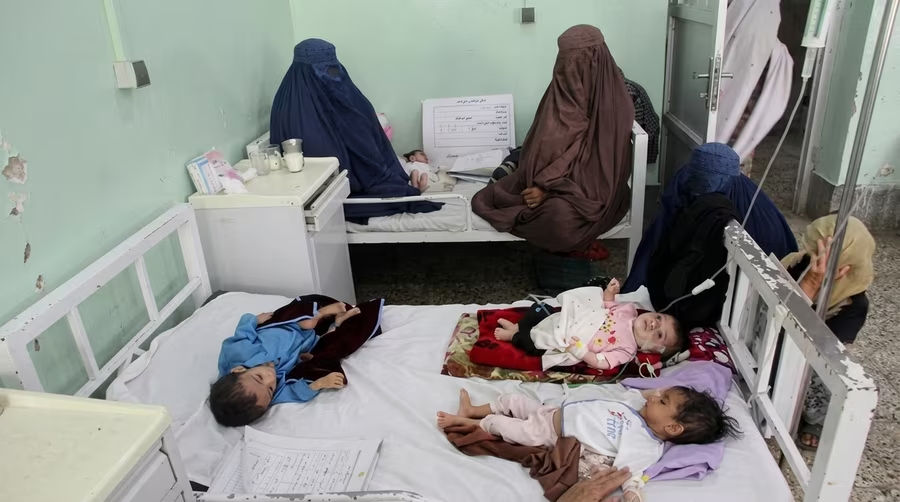
At Sehat-e-Tifl in Wazir Akbar Khan (the Indira Gandhi Institute of Child Health), two children are placed in the same bed regardless of what illness each one has, raising the risk that a child with a milder illness catches something worse from the child sharing their bed. This matches what the hospital’s own reporting has acknowledged: with 400 beds and demand that regularly exceeds capacity, the hospital sometimes has to assign more than one child to a bed.
Conditions on the Ward
Beds themselves are free, but the room they’re in isn’t necessarily kept at a livable temperature — heating and cooling are not maintained.
Staff attentiveness depends on what else is going on. If personnel are in the middle of chatting, playing games, or watching something, that comes first — patients and the family members with them wait until it’s finished before anyone comes to check on them.
Payment and Waiting
Getting admitted, in both government and private hospitals, means registering and waiting your turn — a process that moves in days if you know someone inside the hospital, and can stretch to weeks if you don’t.
Part of why the wait is long: doctors at government hospitals — especially the head doctor or ward head doctor — are good and genuinely expert, but there are too few of them for the number of patients who need to see them. The same doctor often also runs a private practice, where government patients are sometimes referred — turning a free but slow option into a faster, paid one.
Government hospitals perform surgery for free or for very little cost — though as described above, that rarely means the visit itself is free: the list of supplies the family is told to buy from outside, and how the hospital handles the medicine itself, still add up. Private hospitals, by contrast, require the full estimated cost of treatment paid upfront before admission, regardless of how serious the condition is.
Diagnoses and price estimates for the same condition also vary widely from one doctor to another. The same case can get a different read — and a different price — depending on who examines it, before any treatment has even begun.
Surgery and Supplies
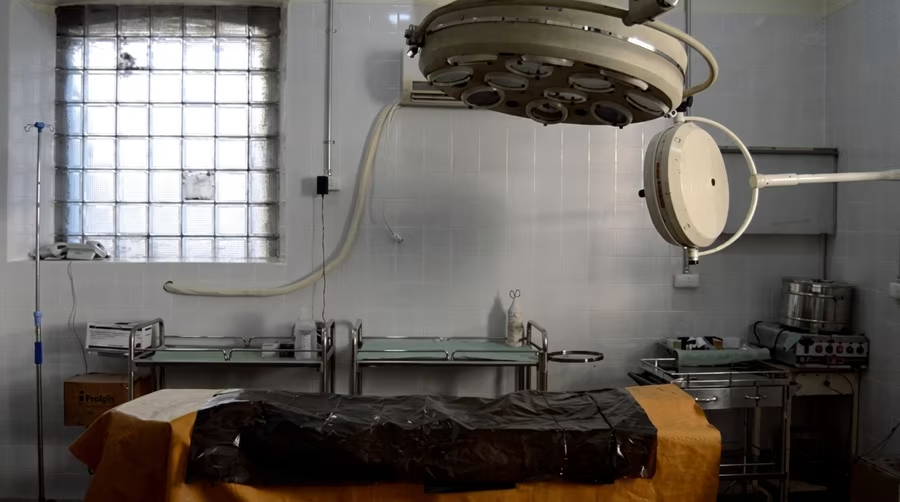
Either hospitals don’t keep their own blood supply on hand, or the blood bank won’t release stored blood unless the family brings in a replacement donor first. Either way, blood for surgery has to be arranged in advance — donated on the spot by someone accompanying the patient, or sourced from a blood bank elsewhere in the city. Without that lined up beforehand, a scheduled surgery can end up delayed.
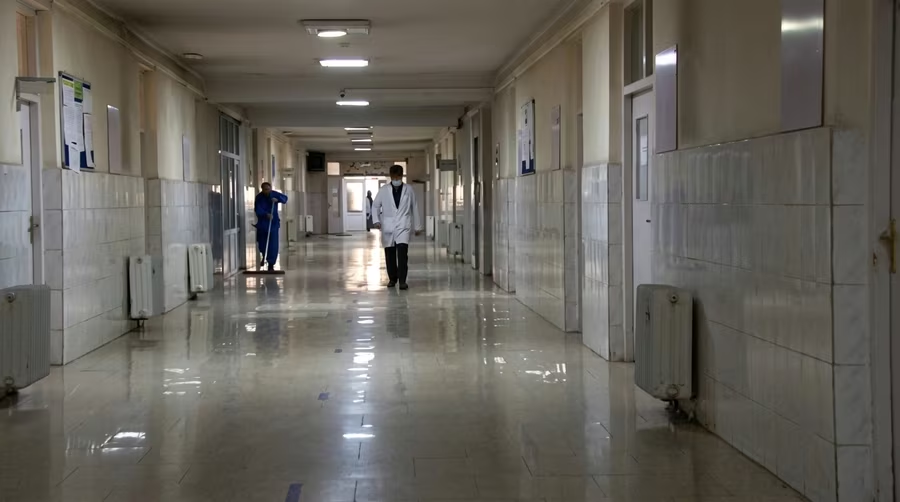
Inside the surgery room, the same cloth used to wipe blood off a patient is reused across different patients. Once washed, it’s dried out in the hospital corridor.
Hospitals don’t always provide a gown for surgery, either — patients sometimes wear their own clothes into the operating room instead.
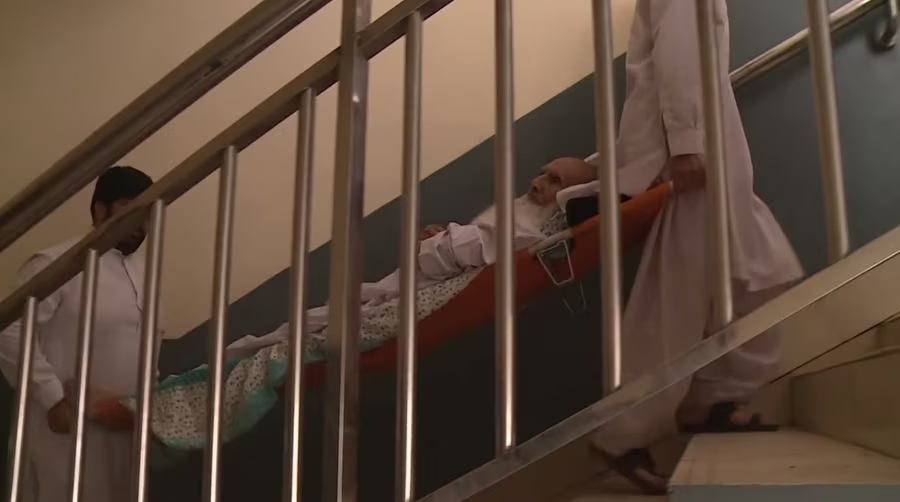
Patients aren’t always wheeled in on a bed, either. One patient, already in pain and in poor condition from an earlier surgery, had to walk to the operating room for his next one — without even a pair of slippers to wear.
What These Accounts Add Up To
None of this is universal, and none of it describes every hospital in the country. But it is consistent enough, across separate accounts, to describe a system where the quality of care a patient receives still depends heavily on who they know and what they can pay, not just on their actual diagnosis.
For how the hospital system itself is organized — and why that gap between government, private, semi-government, and NGO care exists in the first place — see government, private, and NGO hospitals in Afghanistan.
Gallery: Inside the Wards
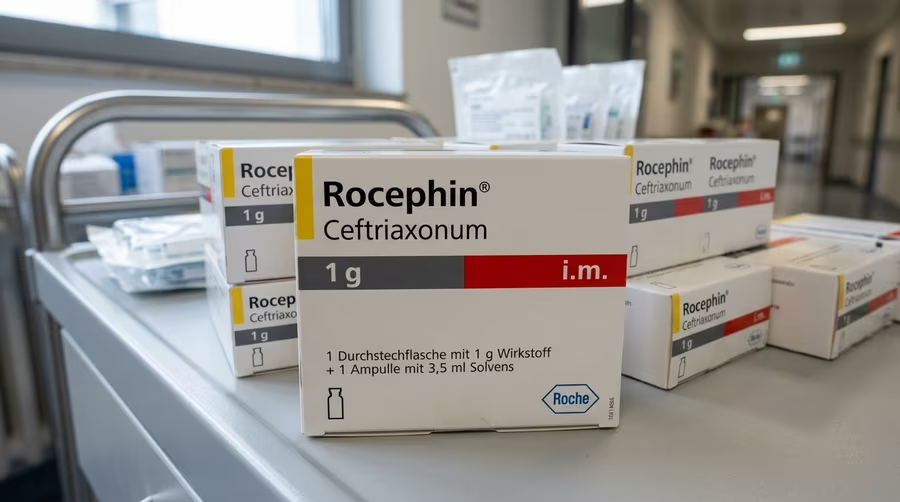
Ceftriaxone is overused too much in Afghanistan, prescribed for straightforward issues that don't call for it.

Do you have a comment or something to share? contact us: info@aboutafg.com