About AFG
Welcome. This site shares practical knowledge, culture, and everyday realities of Afghanistan - but with a different focus than most resources you’ll find online.
Rather than repeating what you can find on Wikipedia or in a quick search, we cover things you can only know by living in the country: local knowledge, unwritten rules, and stories that no one else has put online. That’s what this site is for.
Topics span food, education, migration, travel, exports, and daily life - whether you’re an Afghan navigating life abroad, a professional working on Afghanistan-related projects, or simply curious.
Browse by category from the menu or explore recent articles below.
Saffron: Afghanistan's Red Gold
Posted on June 25, 2026
(Last modified on July 28, 2026)
|
4 min
|
817 words
|
About AFG Editorial Team
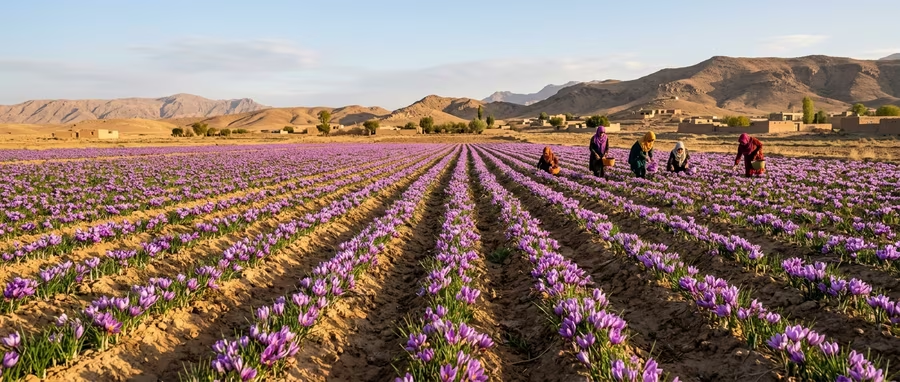
Before sunrise each autumn, women in Herat’s fields bend to pick crocus flowers by hand. The three red threads inside each blossom — dried and sorted — become Afghanistan’s most valuable export by weight: saffron.
[Read More]Namad: Afghanistan's Felted Wool Mat
Posted on June 24, 2026
(Last modified on July 3, 2026)
|
5 min
|
1061 words
|
About AFG Editorial Team
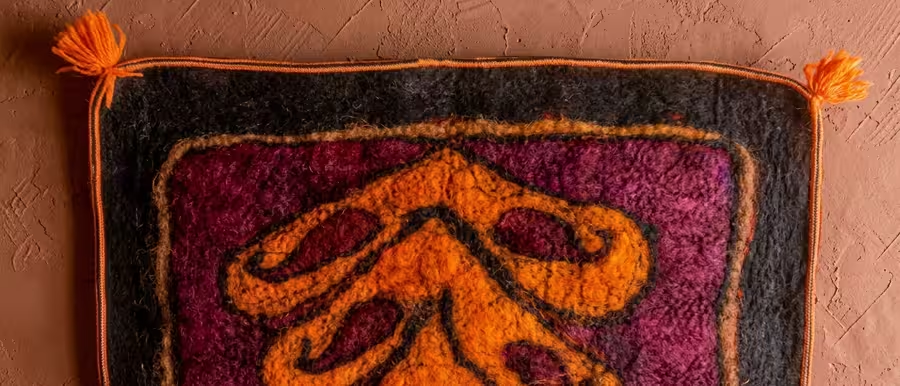
Namad (نمد) is one of Afghanistan’s oldest crafts. Unlike a carpet or a buria, it needs no loom, no shuttle, and no knots. Raw wool, hot water, and sustained pressure are all it takes — and several hours of collective effort from the women of a village.
[Read More]Afghan Carpets: From Tribal Looms to Global Markets
Posted on June 21, 2026
(Last modified on July 3, 2026)
|
9 min
|
1777 words
|
About AFG Editorial Team
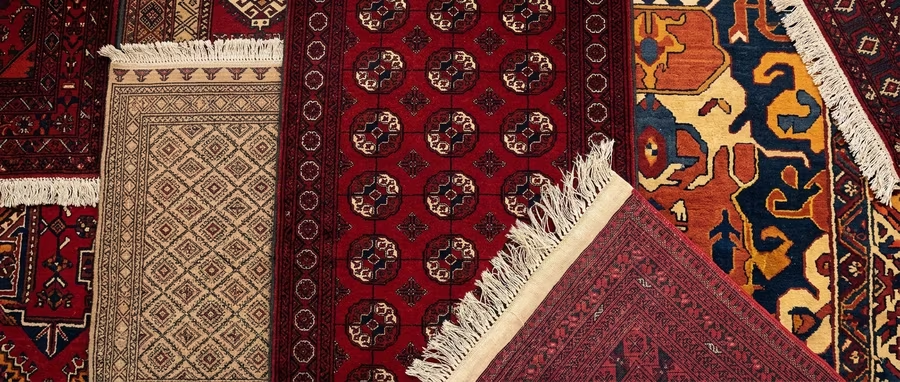
A hand-knotted Afghan carpet can take months to weave and travel thousands of miles before it reaches a buyer who has no idea how it was made, graded, or named along the way. Here’s the full story — from the loom to the global market.
[Read More]Buria: Afghanistan's Ancient Reed Mat
Posted on June 21, 2026
(Last modified on July 3, 2026)
|
4 min
|
757 words
|
About AFG Editorial Team
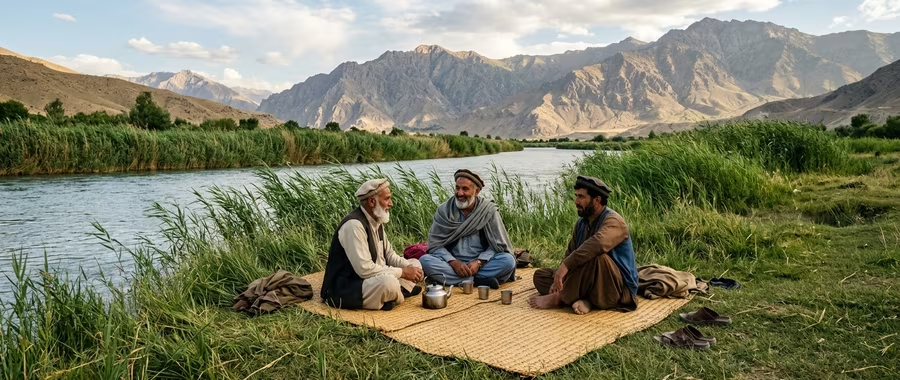
The buria predates the carpet. Before wool was knotted and dyed, Afghan families were weaving reed mats from plants that grew wild along rivers like the Helmand and the Amu. Simple, durable, and free to make — it is one of the oldest crafts still practiced in Afghanistan.
[Read More]Chenaq: Afghanistan's Wishbone Memory Game
Posted on June 20, 2026
(Last modified on July 3, 2026)
|
3 min
|
474 words
|
About AFG Editorial Team
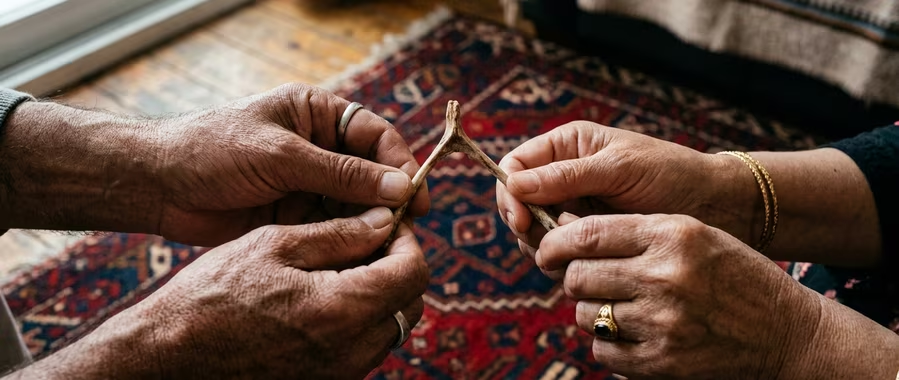
Every time a chicken is cooked, one bone is worth keeping. The chenaq — the small, forked wishbone at the top of the bird’s chest — gets pulled out, set aside, and used to start a game that can last for days — or even years. Some people take it to extremes.
[Read More]The Helmandi Cooler: Afghanistan's Traditional Air Conditioning
Posted on June 15, 2026
(Last modified on July 3, 2026)
|
4 min
|
818 words
|
About AFG Editorial Team
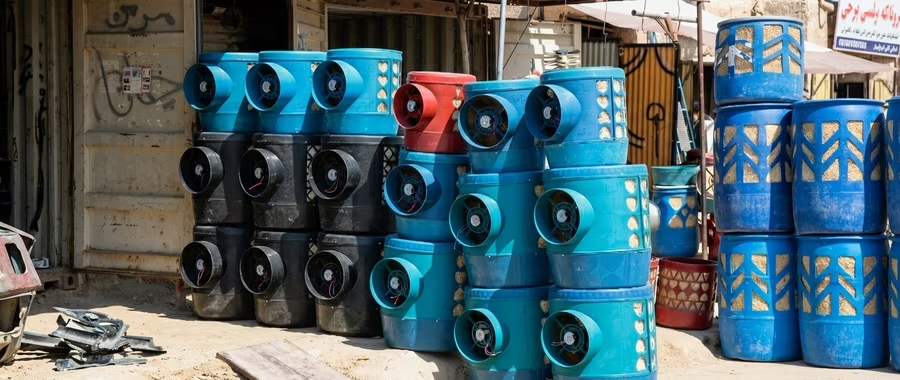
Afghanistan has a long tradition of building for the climate. From the underground channels of the karez irrigation system to the wind-catching towers of Sistan, Afghans have always found practical ways to deal with extreme heat without modern machinery. One of the most inventive examples is the Helmandi cooler — a low-cost evaporative cooler that has been keeping homes cool across Afghanistan for generations, no grid power required.
[Read More]Dari vs Farsi: What's the Difference — and Does It Matter?
Posted on June 14, 2026
(Last modified on July 3, 2026)
|
8 min
|
1520 words
|
About AFG Editorial Team
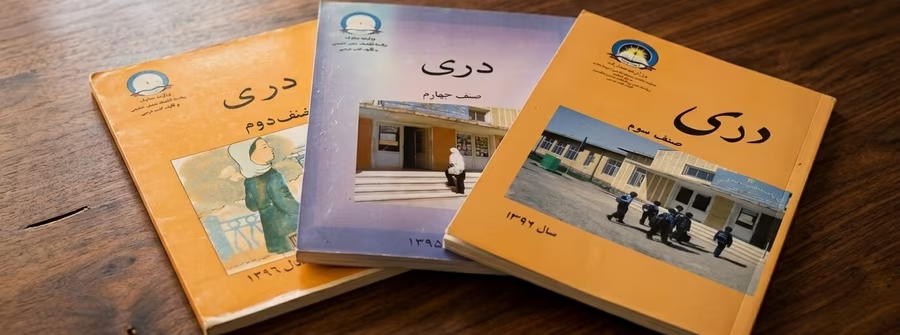
If you’ve ever heard someone say they speak “Persian” and wondered whether that’s the same as Dari or Farsi, you’re not alone. The relationship between these languages confuses a lot of people — even those who speak one of them. The short answer is: they all belong to the same Persian language family. The longer answer is worth understanding.
[Read More]The Karakul Hat: Afghanistan's Traditional Fur Hat
Posted on June 11, 2026
(Last modified on July 3, 2026)
|
6 min
|
1069 words
|
About AFG Editorial Team
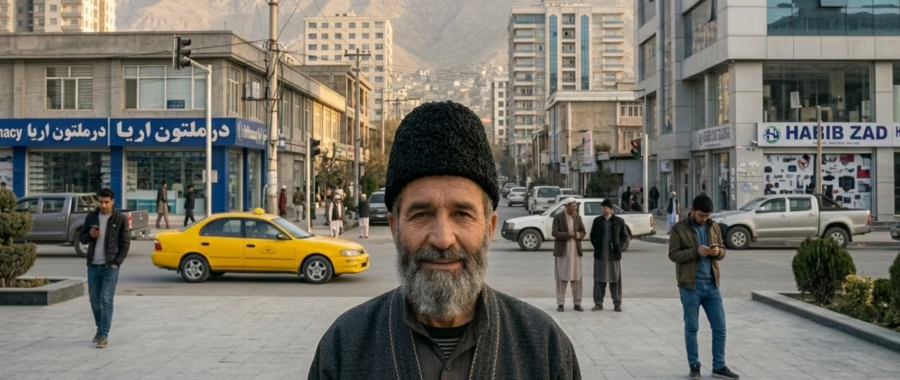
Few pieces of Afghan dress have travelled as far as the karakul. It has sat on the heads of rulers and presidents in front of international cameras, and on the heads of men in market stalls who have never thought twice about it.
[Read More]School Management in Afghanistan Has Gone Digital
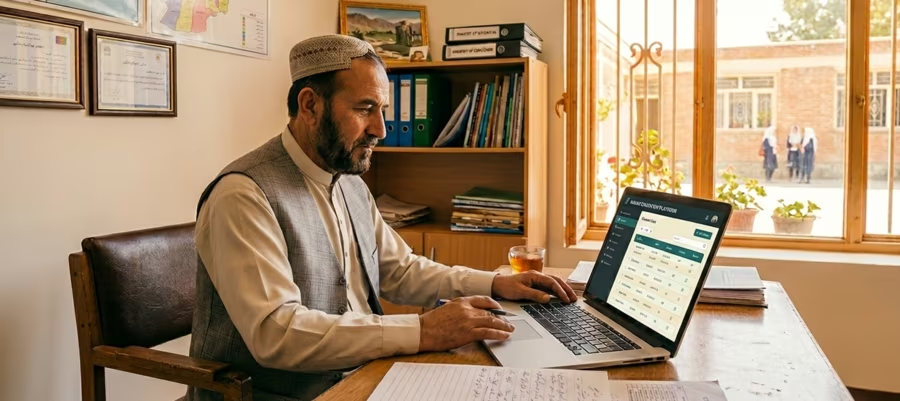
Posted on June 6, 2026
(Last modified on July 3, 2026)
|
5 min
|
1019 words
|
About AFG Editorial Team
Attendance tracked by biometrics. Parents notified by SMS when a child is late. Fees recorded in a financial system. Teachers no longer filling out paper reports for the Ministry of Education by hand. This is how a growing number of Afghan schools now run their administration.
[Read More]How Afghans Heat Their Homes in Winter
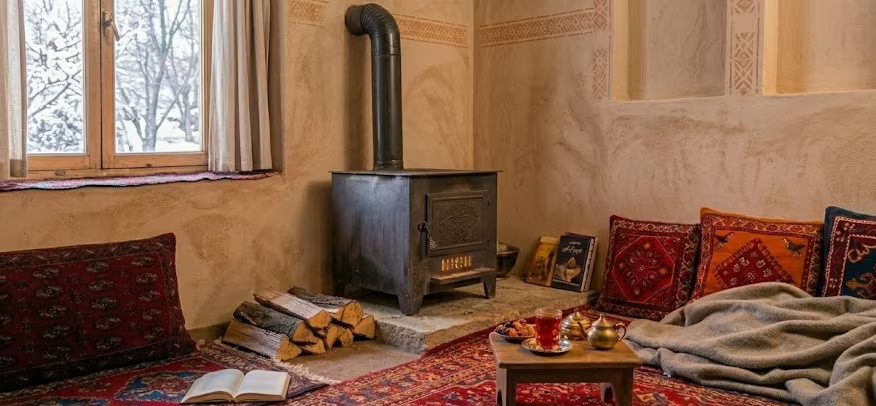
Posted on June 4, 2026
(Last modified on July 16, 2026)
|
9 min
|
1759 words
|
About AFG Editorial Team
Afghan winters range from cold to severe. In Kabul the temperature regularly drops below freezing. In the northeast — Badakhshan and the high mountain valleys — it can reach −30°C or lower. For most Afghan households, the answer to winter is not a central heating system.
[Read More]