Roghan Zard: Afghanistan's Traditional Clarified Butter

Posted on July 28, 2026
|
4 min
|
701 words
|
About AFG Editorial Team
Roghan zard — literally “yellow oil” — is one of Afghanistan’s oldest dairy staples, made the same patient way it always has been: milk turned to yogurt, yogurt churned to butter, and butter slowly boiled down to rich, golden clarified butter.
[Read More]Naan: The Bread Behind Every Afghan Meal
Posted on July 16, 2026
(Last modified on August 2, 2026)
|
8 min
|
1637 words
|
About AFG Editorial Team
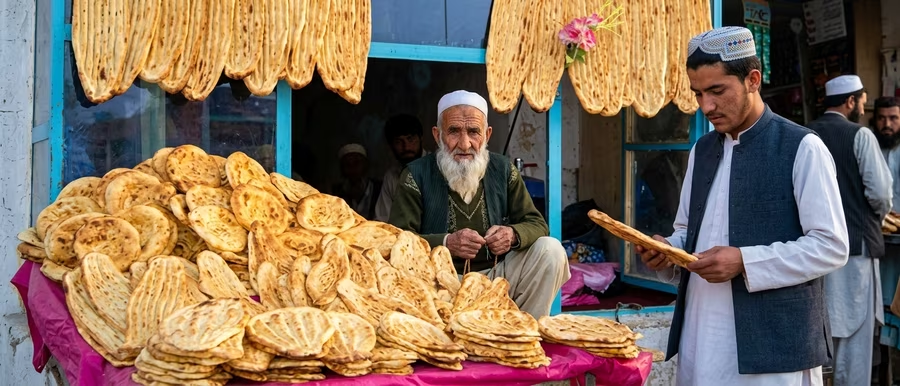
No Afghan meal is really complete without naan (نان). It shows up at breakfast, lunch, and dinner — and depending on what goes into the dough and how it’s baked, it can end up looking and tasting like a completely different food.
[Read More]Boji-Dozi: Afghanistan's Sack Embroidery Craft
Posted on July 10, 2026
|
4 min
|
664 words
|
About AFG Editorial Team
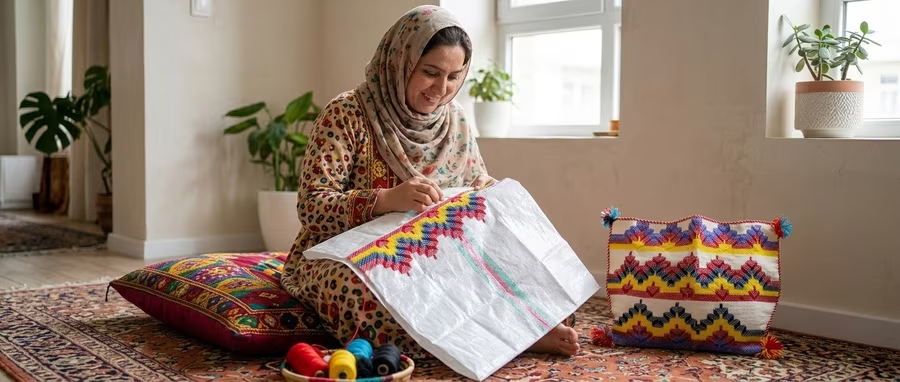
One of Afghanistan’s simplest handicrafts starts with something most people would throw away: an empty sack. Boji-dozi — literally “sack-embroidery” — turns that plastic-woven material into something worth using, from shopping bags to table spreads, with nothing more than colored thread, a needle, and a hand-stitched design.
[Read More]Kah-gil: The Straw-and-Clay Plaster That Keeps Afghan Roofs Dry
Posted on July 3, 2026
(Last modified on July 16, 2026)
|
5 min
|
955 words
|
About AFG Editorial Team
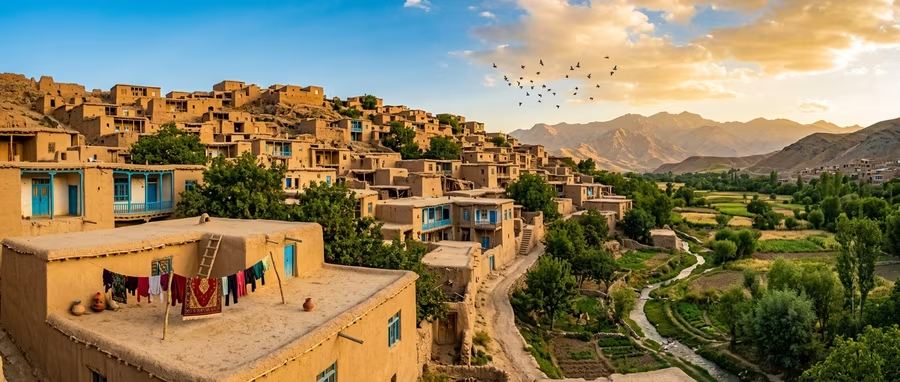
Long before cement became common in Afghanistan, families sealed their roofs against snow and rain with nothing more than clay, chopped straw, and water — a mixture still applied by hand today, in cities and villages alike.
[Read More]Khurjin: Afghanistan's Handwoven Wool Saddlebag
Posted on June 28, 2026
(Last modified on July 10, 2026)
|
4 min
|
836 words
|
About AFG Editorial Team
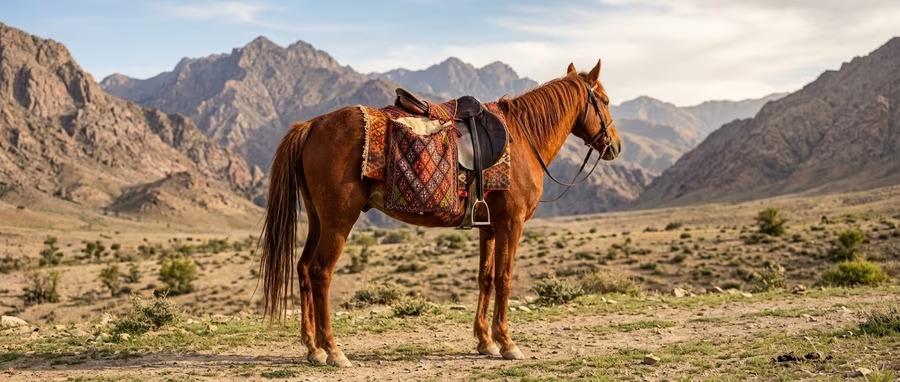
The khurjin is one of the most practical objects rural Afghanistan has produced — a double-pocketed wool saddlebag, woven flat on the ground and then folded and stitched into shape. It travels to the field, the market, the mill, and back, draped across the back of a horse or donkey — and increasingly, hanging from a bicycle or motorcycle too.
[Read More]Toshak and Poshti: The Floor Bedding at the Heart of Afghan Home Life
Posted on June 25, 2026
(Last modified on July 3, 2026)
|
5 min
|
998 words
|
About AFG Editorial Team
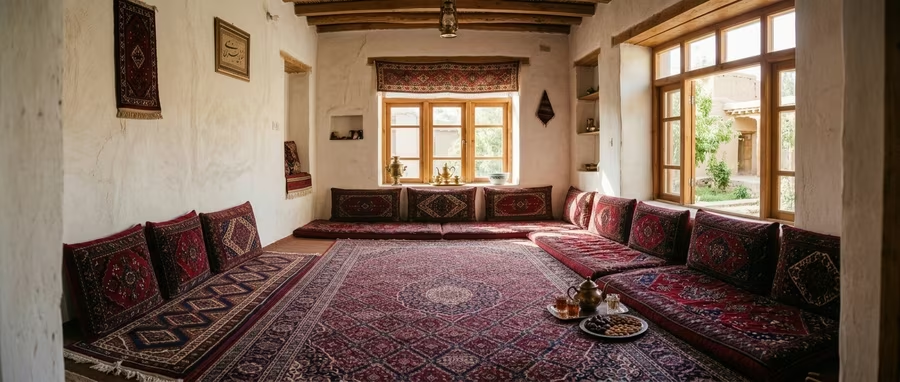
Walk into a traditional Afghan home and the first thing you notice is the floor. No sofas against the wall, no armchairs in the corner — instead, soft cushioned mattresses laid flat and bolstered with back supports, all arranged in a neat line where the wall meets the carpet. That is the toshak and poshti, and once you understand them, a lot about Afghan home life starts to make sense.
[Read More]Saffron: Afghanistan's Red Gold
Posted on June 25, 2026
(Last modified on July 28, 2026)
|
4 min
|
817 words
|
About AFG Editorial Team
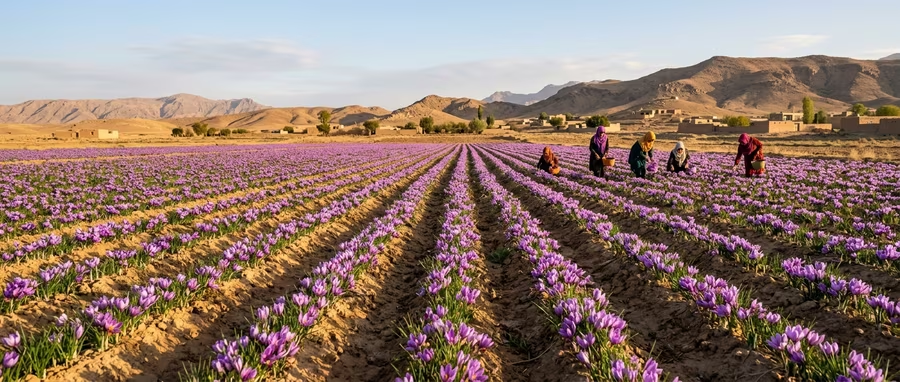
Before sunrise each autumn, women in Herat’s fields bend to pick crocus flowers by hand. The three red threads inside each blossom — dried and sorted — become Afghanistan’s most valuable export by weight: saffron.
[Read More]Namad: Afghanistan's Felted Wool Mat
Posted on June 24, 2026
(Last modified on July 3, 2026)
|
5 min
|
1061 words
|
About AFG Editorial Team
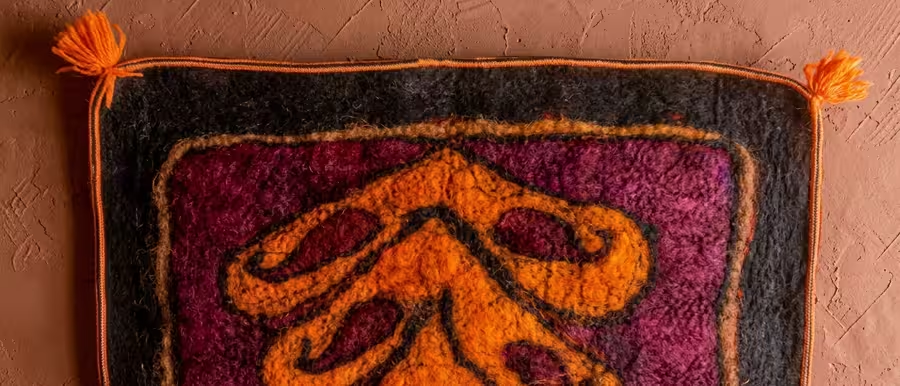
Namad (نمد) is one of Afghanistan’s oldest crafts. Unlike a carpet or a buria, it needs no loom, no shuttle, and no knots. Raw wool, hot water, and sustained pressure are all it takes — and several hours of collective effort from the women of a village.
[Read More]Afghan Carpets: From Tribal Looms to Global Markets
Posted on June 21, 2026
(Last modified on July 3, 2026)
|
9 min
|
1777 words
|
About AFG Editorial Team
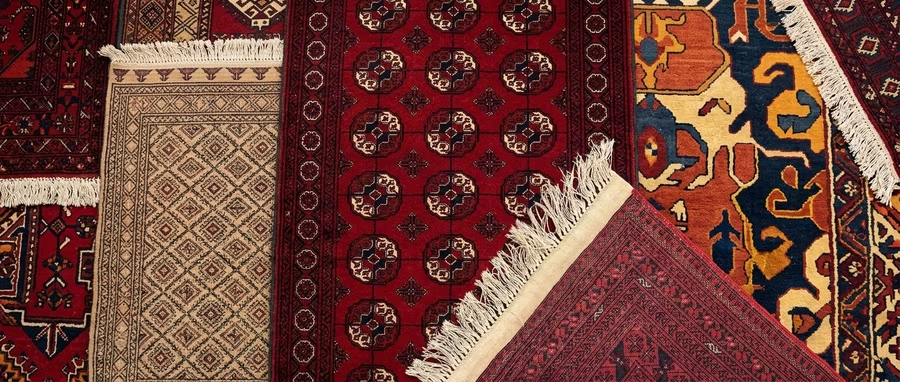
A hand-knotted Afghan carpet can take months to weave and travel thousands of miles before it reaches a buyer who has no idea how it was made, graded, or named along the way. Here’s the full story — from the loom to the global market.
[Read More]Buria: Afghanistan's Ancient Reed Mat
Posted on June 21, 2026
(Last modified on July 3, 2026)
|
4 min
|
757 words
|
About AFG Editorial Team
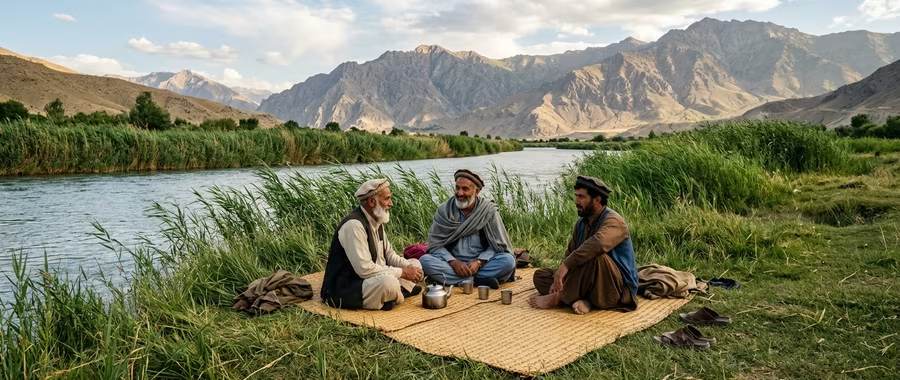
The buria predates the carpet. Before wool was knotted and dyed, Afghan families were weaving reed mats from plants that grew wild along rivers like the Helmand and the Amu. Simple, durable, and free to make — it is one of the oldest crafts still practiced in Afghanistan.
[Read More]